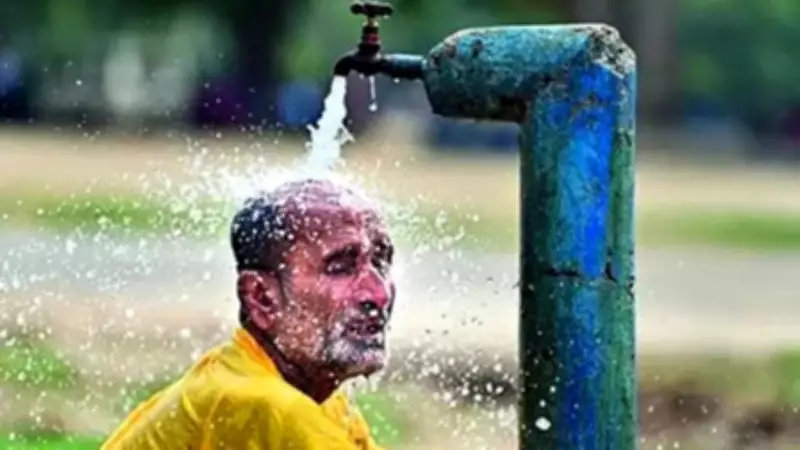
The World Meteorological Organisation (WMO) has issued an urgent update, warning that El Nino is rapidly developing due to unusually warm waters in the Pacific Ocean. This phenomenon is expected to significantly influence global temperature and rainfall patterns, heightening the risk of extreme weather events in the coming months. According to the WMO, there is an 80% likelihood of El Nino forming between June and August, making it almost certain that conditions will severely weaken India's monsoon and lead to a hotter-than-normal June, as previously predicted by the India Meteorological Department (IMD).
El Nino Strength and Duration
While there remains uncertainty regarding the peak strength and exact timing of El Nino, most forecast models suggest it will be at least moderate and possibly strong. The WMO, considered the most authoritative source of information for governments, stated that the probabilities for El Nino to persist until at least November are near or above 90%. This means its impact will be felt throughout India's entire four-month monsoon season, which extends until September and coincides with critical summer sowing operations.
Record Global Temperatures in 2024
The WMO highlighted that the most recent El Nino event, occurring in 2023-24, was among the five strongest on record and contributed to the record global temperatures observed in 2024. WMO Secretary-General Celeste Saulo emphasized the need for preparedness, stating, "We need to prepare for a potentially strong El Nino event, which will exacerbate drought and heavy rainfall and increase the risk of heatwaves both on land and in the ocean."

India's Preparedness Measures
In response to the looming threat, the Union Ministry of Agriculture convened a meeting to review the country's preparedness. Union Minister Shivraj Singh Chouhan urged farmers not to panic and directed vulnerable states to remain alert and coordinate with the central government and various stakeholders. The goal is to ensure that farmers do not face problems during their Kharif sowing operations. Key interventions discussed include promoting drought-tolerant crop varieties and less water-consuming crops such as millets, providing weather-based agro-advisory services, implementing efficient water management strategies, and adopting location-specific adaptation measures to minimize agricultural losses.
Contingency Plans and Reservoir Levels
Chouhan emphasized that contingency plans should be activated down to the district level and implemented according to local conditions, including water availability, crop patterns, seed availability, sowing progress, rainfall intervals, and district-specific risks. This approach aims to provide farmers with practical and timely solutions. During the meeting, it was noted that water levels in the country's reservoirs are currently satisfactory, with overall storage reported at 127% of normal levels for this period.
Meanwhile, the IMD has indicated that the monsoon is expected to set in over Kerala around June 4, slightly later than its normal onset date of June 1. The agency has already forecast below-normal monsoon rainfall, with a 60% chance of deficient precipitation across the country.