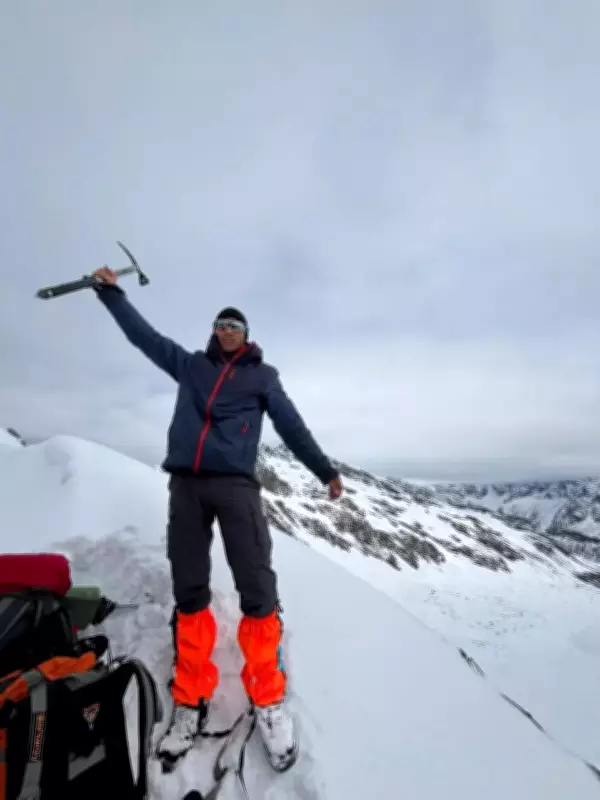
Environmentalist Chandan Singh Nayal and his team successfully completed the challenging 15,092ft Kanakata Pass trek in the remote Sunderdhunga Glacier region of Bageshwar district in three days, from May 5 to May 7, despite heavy snowfall along the route. Nayal stated that the expedition was not only for high-altitude trekking but also to assess changes in the Himalayan environment and the impact of climate change on glaciers.
Expedition Details
The team navigated the demanding route from Jatoli to Jatoli, negotiating snow-covered terrain, sub-zero temperatures, and continuous snowfall. The expedition was led by Nehru Institute of Mountaineering (NIM)-trained guide Jeetu Danu, with Mohan Danu also accompanying the team. Their local experience and mountaineering skills were crucial in ensuring the group completed the ascent safely.
Environmental Observations
Nayal told TOI that the team undertook the expedition to document field-level signs of environmental change in the higher Himalayas. He expressed growing concern over the condition of glaciers, noting that winter snowfall has reduced and late-season snow is not contributing to glacier formation as it once did.

"This winter witnessed extremely low snowfall, depriving glaciers of the natural strengthening they require. The snowfall occurring now in May is loose and unstable, melting almost immediately as temperatures rise. This is not a healthy sign for glacier formation. If immediate steps are not taken to protect the Himalayan ecosystem, the coming years could bring an even more severe water crisis," Nayal said.
Broader Implications
Nayal added that Himalayan glaciers serve as the lifeline for millions of people living downstream, and changes in snowfall and melting patterns could affect rivers, ecosystems, and communities across the plains. He emphasized that the expedition underlined both the difficulty of high-altitude movement in unstable weather and the urgent need to conserve the fragile Himalayan ecology.
The team's successful trek highlights the growing challenges posed by climate change in the region and the importance of scientific observation to inform conservation efforts.