

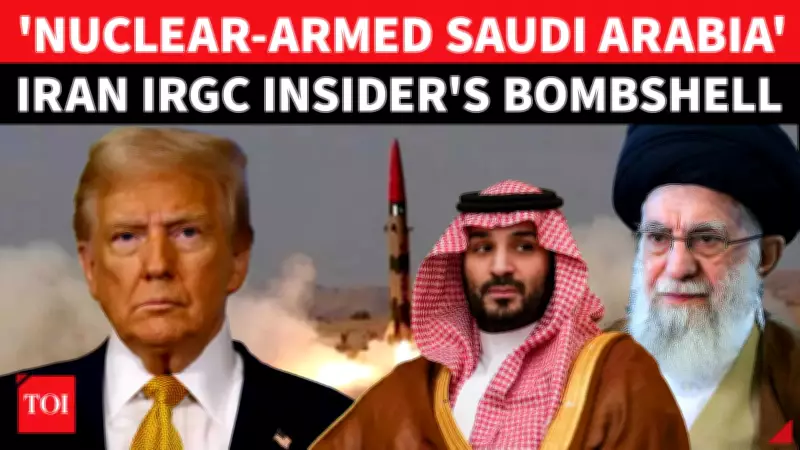
Former IRGC Commander Makes Explosive Nuclear Allegation Against Saudi Arabia
A former high-ranking commander of Iran's Islamic Revolutionary Guard Corps has leveled a startling accusation, asserting that Saudi Arabia already possesses nuclear weapons and that both the United States and Israel are fully aware of this development. The remarks were made by Hussein Kanani during a recent interview, which occurred against a backdrop of escalating regional tensions concerning Iran's nuclear ambitions and an increasing U.S. military footprint in the Middle East.
Allegations of Covert Nuclear Capability
Hussein Kanani, who previously served as a senior official within the IRGC, stated unequivocally that Saudi Arabia has secretly acquired nuclear weapons. He further claimed that this capability is not hidden from American and Israeli intelligence agencies, implying a level of tacit acknowledgment or even complicity from these nations. This allegation directly challenges the public narrative surrounding nuclear proliferation in the region and comes at a sensitive time as Iran engages in nuclear discussions with the United States.
Broader Accusations and Regional Warnings
In his wide-ranging interview, Kanani did not limit his comments to the nuclear issue. He also accused U.S. and Israeli intelligence services of actively supporting anti-government protests within Iran, alleging foreign interference in the country's internal affairs. Furthermore, he issued a stark warning regarding potential American military action.

Kanani cautioned that any strike by the United States against Iran could provoke an unconventional and severe response from Tehran. This response, he suggested, might not be limited to direct retaliation but could include strategic actions such as targeting Israel or disrupting critical maritime traffic through the Strait of Hormuz, a vital global oil shipping chokepoint.
Context of Heightened Geopolitical Strain
These provocative statements emerge during a period of intense geopolitical friction. The Middle East is currently grappling with several overlapping crises:
- Ongoing negotiations between Iran and the United States over Tehran's nuclear program.
- A significant buildup of U.S. military assets in the region, which has raised concerns about potential conflict.
- Persistent regional rivalries, particularly between Iran and Saudi Arabia, which have long been engaged in a proxy struggle for influence.
Kanani's claims, while unverified and likely to be disputed, add a new layer of complexity and potential volatility to an already unstable situation. They reflect the deep-seated suspicions and the high-stakes nature of security dynamics in the Middle East, where nuclear capabilities remain one of the most sensitive and consequential issues.






