Former Taxi Driver Emerges as Central Figure in Russia's Covert Sabotage Campaign Across Europe
Western security officials have identified a shadowy network of sabotage plots across Europe, which they attribute directly to Russia's intelligence services operating in a clandestine gray zone between peace and declared war. These coordinated operations represent a sophisticated and evolving unconventional conflict strategy masterminded from Moscow.
Destructive Operations Spanning Multiple European Nations
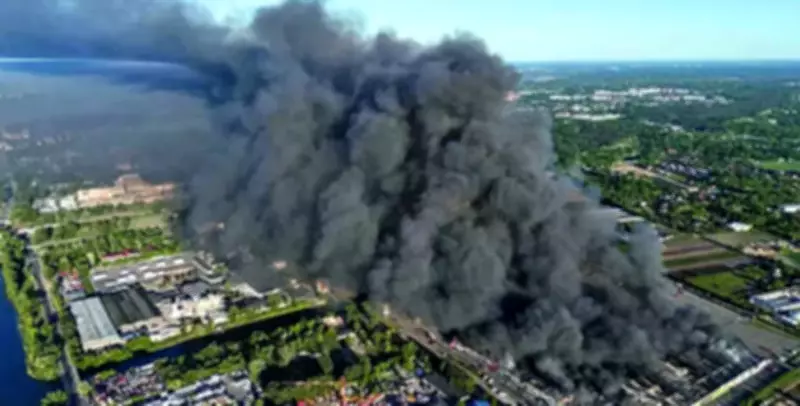
The documented incidents form a disturbing pattern of calculated destruction. Security agencies have confirmed an arson attack that completely devastated more than 1,000 businesses located just outside Warsaw, Poland. Another significant fire targeted and severely damaged a major IKEA retail store in Lithuania. Investigators have additionally uncovered plans to place incendiary devices aboard cargo aircraft operating in Britain, Germany, and Poland.
What makes these operations particularly noteworthy is their operational architect. According to multiple security officials from five different European nations, the key coordinator behind these destructive plots is not a traditional intelligence officer embedded within government structures. Instead, he is Aleksei Vladimirovich Kolosovsky, a 42-year-old former taxi driver who resides in rural Russian farm country.

The Unconventional Operative: Aleksei Kolosovsky
Kolosovsky has established himself as an essential player in Russia's new form of hybrid warfare through his extensive connections to organized criminal networks. These groups have diversified expertise in areas including sophisticated hacking operations, manufacturing and distributing counterfeit identification documents, and coordinated vehicle theft rings.
Court documents and interviews with more than a dozen European security officials reveal that Kolosovsky, with direct support and guidance from Russian intelligence agencies, has personally overseen the execution of recent sabotage operations in Poland, Lithuania, Britain, and Germany. There are strong indications his activities may extend to additional European locations currently under investigation.
Security analysts describe Kolosovsky's role as fundamentally novel within intelligence operations. "He is not a formally trained intelligence officer, nor is he a traditional asset embedded within a foreign government," explained one European security official. "He operates more as a specialized service provider who maintains exceptionally close working relationships with intelligence officers, particularly those from Russia's GRU military intelligence service, which bears primary responsibility for sabotage missions."
The Strategic Value of Criminal Networks
Operatives like Kolosovsky have become increasingly common within the Kremlin's expanding and increasingly violent sabotage campaign across Europe. His primary value to Russian intelligence lies in his extensive network of criminal associates who possess specialized knowledge in moving goods and people across borders while avoiding law enforcement detection.
Most critically, these criminal contacts legally reside within European nations and maintain the ability to travel freely throughout the continent. This mobility has become substantially more difficult for Russia's professional intelligence officers following widespread diplomatic expulsions related to the Ukraine conflict.
Blaise Metreweli, who leads Britain's renowned MI6 foreign intelligence service, articulated the strategic challenge during a recent address: "We are now operating in a complex space that exists between traditional peace and declared war. Russia is systematically testing Western nations in this gray zone using tactics deliberately designed to remain just below the formal threshold of warfare."
From Obscurity to Intelligence Priority
Kolosovsky first attracted significant attention from Western intelligence services following two coordinated arson attacks in May 2024, according to two security officials with direct knowledge of the investigations. Operating under variations of the alias "Warrior" on the Telegram messaging platform, he recruited a dispersed network of operatives, including a Ukrainian teenager, to plan and execute attacks.

His criminal background includes a brief detention by Russian authorities in 2021, though the precise reasons for this detention remain unclear to Western intelligence agencies. Nothing in Kolosovsky's public profile suggests a life of international intrigue. He appears to maintain a modest lifestyle, with his last visible social media post dating to December 15, 2020—his birthday—featuring a simple photograph with his mother.
A Strategic Necessity for Russian Operations
The utilization of figures like Kolosovsky represents a strategic adaptation born of necessity for Russian intelligence operations in Europe. Since Russia's full-scale invasion of Ukraine began, European nations have expelled more than 750 Russian diplomats, whom security officials describe as intelligence operatives using diplomatic cover.
Ken McCallum, director of Britain's domestic security agency MI5, emphasized this point in 2024: "The great majority of those expelled individuals were indeed intelligence officers operating under diplomatic protection. Their removal has created significant operational challenges for traditional Russian intelligence activities within Europe."
This operational vacuum has created opportunities for unconventional actors like Kolosovsky, who can leverage criminal networks to achieve strategic objectives while providing Moscow with plausible deniability. European security agencies now face the complex challenge of countering this new hybrid threat that blurs the lines between organized crime and state-sponsored sabotage.