

Poll Season Waste Crisis: Experts Urge Political Parties to Manage 15,362 Tonnes of Campaign Debris
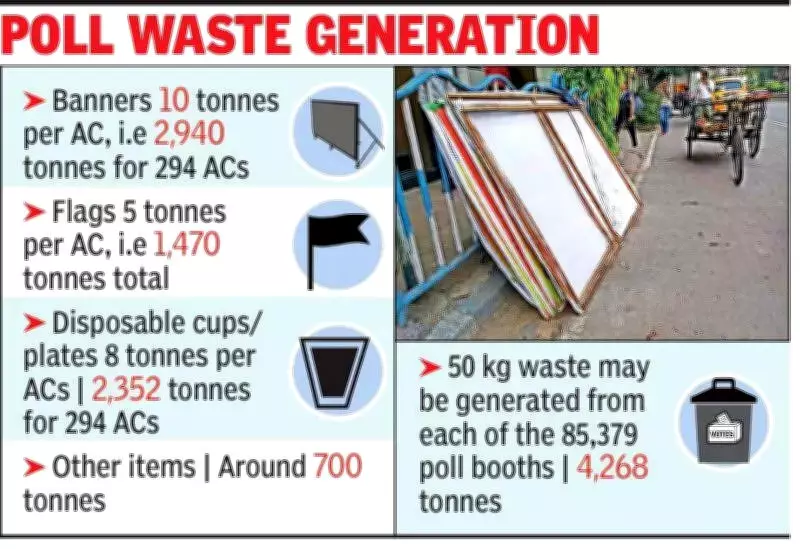
In the midst of the heated election season, environmental experts have issued a stark warning to political parties, urging them to take immediate responsibility for the massive waste generated by their campaigns. A comprehensive study conducted by the International Society of Waste Management, Air and Water, led by former Jadavpur University professor and renowned waste management expert Sadhan Ghosh, has projected a staggering 15,362 tonnes of solid waste will be produced across West Bengal by the time the elections conclude.
Alarming Projections from Election Waste Study
The study meticulously analyzed data from previous elections to arrive at these concerning figures. According to the research, this waste primarily consists of single-use plastic materials, including banners, posters, flags, disposable cups, and plates used extensively by political parties for their campaigning activities. "There is currently no effective mechanism in place to properly dispose of this enormous volume of waste," emphasized Professor Ghosh, highlighting a critical environmental oversight in the electoral process.
Breaking Down the Waste Generation Numbers
The research provides detailed breakdowns of how this massive waste accumulation occurs:

- Banners and Flags: Approximately 10 tonnes of banners are used in each assembly constituency area. With West Bengal having 294 assembly segments, this amounts to a total of 2,940 tonnes of waste from banners and flags alone.
- Disposable Items: Roughly eight tonnes of disposable cups, plates, and other campaign materials are used daily by parties across the state. Over the election period, this accumulates to about 2,352 tonnes of additional waste.
Professor Ghosh noted that these figures represent careful estimates based on comprehensive data analysis from recent elections. "The quantity has been estimated by combining all related factors. The actual number could vary by about 10% more or less from these projections," he clarified, indicating these are conservative estimates that might actually be higher.
Geographical Considerations and Waste Distribution
The study also considered the geographical dimensions of waste distribution. Each assembly constituency typically covers approximately 300 square kilometers of area, with the exception of Kultali constituency, which spans a much larger 1,176 square kilometers. This variation in constituency sizes further complicates waste management efforts, as larger areas require more extensive cleanup operations and disposal mechanisms.
Proposed Solutions and Regulatory Actions
In response to these alarming findings, Professor Ghosh and his team are preparing to take formal action. "We will be placing a memorandum before the Election Commission, urging them to frame a Standard Operating Procedure for proper disposal of election waste," he announced. The proposal includes several key components:
- Establishing clear guidelines for waste management during election campaigns
- Implementing a system to levy fines on political parties and organizations that fail to properly manage their campaign waste
- Creating specific penalties for waste burning and tyre burning incidents during the poll period
- Developing accountability measures to ensure parties take responsibility for the environmental impact of their campaigns
The experts emphasize that with lakhs of banners and flags being used during elections, the waste problem has reached critical proportions that demand immediate attention from both political parties and regulatory bodies. The proposed measures aim to create a more sustainable electoral process that minimizes environmental damage while maintaining democratic engagement.






