

Explosions and Defiance Mark Iran's Quds Day Rallies
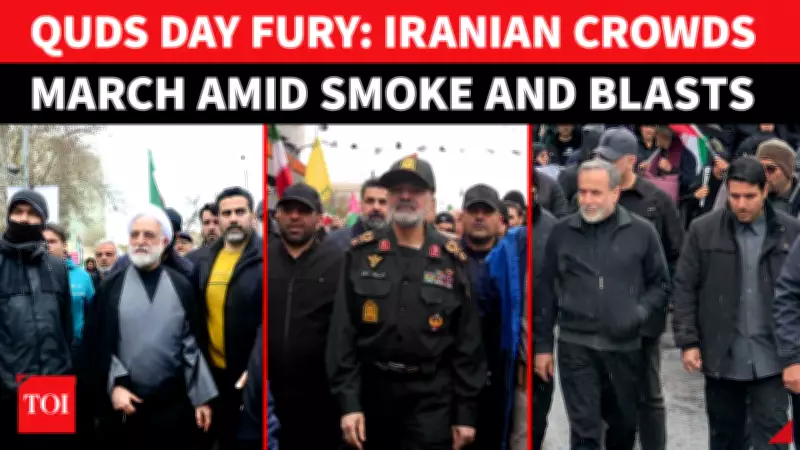
On March 13, 2026, massive Quds Day rallies erupted across Tehran and Mashhad, drawing thousands of Iranians into the streets in a powerful show of solidarity with Palestinians. The demonstrations unfolded against a backdrop of ongoing US–Israeli military strikes, with participants waving Iranian and Palestinian flags while chanting fervent anti-Israel and anti-U.S. slogans. In a symbolic act of defiance, many burned flags representing perceived enemies, underscoring the tense atmosphere.
Chaos and Resilience Amid Explosions
Footage from the events captured alarming scenes of smoke and explosions near Ferdowsi Square in Tehran, yet the crowds demonstrated remarkable resilience. Despite the chaos and potential danger, marchers continued their procession, embodying a spirit of national resolve. This unwavering commitment highlighted the deep-seated sentiments driving the rallies, as Iranians framed their participation as acts of defiance against external military pressure.
Senior Officials Emphasize Government Unity
Adding to the significance of the rallies, senior Iranian officials, including prominent figures like Ali Larijani and Mohammad Eslami, were visibly present among the demonstrators. Their participation served to emphasize government unity and strength, sending a clear message of solidarity from the leadership to the people. This alignment between officials and citizens reinforced the narrative of a united front in the face of escalating conflicts.

Vows of Resistance and National Resolve
Throughout the marches, participants voiced strong vows to resist external pressures, with chants and slogans echoing themes of perseverance and national pride. The rallies were not merely protests but were framed as expressions of Iran's steadfast resolve during a period of heightened tensions and war. This collective stance aimed to project an image of invincibility and determination, resonating with broader geopolitical dynamics in the region.
In summary, the Quds Day events in Iran showcased a blend of chaos and courage, with explosions failing to deter thousands from marching in support of Palestine. The presence of top leaders underscored governmental backing, while the defiant atmosphere reflected a nation's commitment to resisting perceived adversaries. As conflicts continue to escalate, these rallies stand as a testament to Iran's enduring spirit and strategic positioning in regional affairs.






