Groundbreaking Discovery: Shark Spotted in Antarctic Waters for First Time
In a remarkable discovery that has stunned the marine science community, researchers have documented what appears to be the first-ever confirmed sighting of a shark in the icy, inhospitable waters of the Antarctic Ocean. This unprecedented observation directly challenges long-standing scientific assumptions that sharks do not inhabit the region's extreme polar environment.
Details of the Historic Sighting
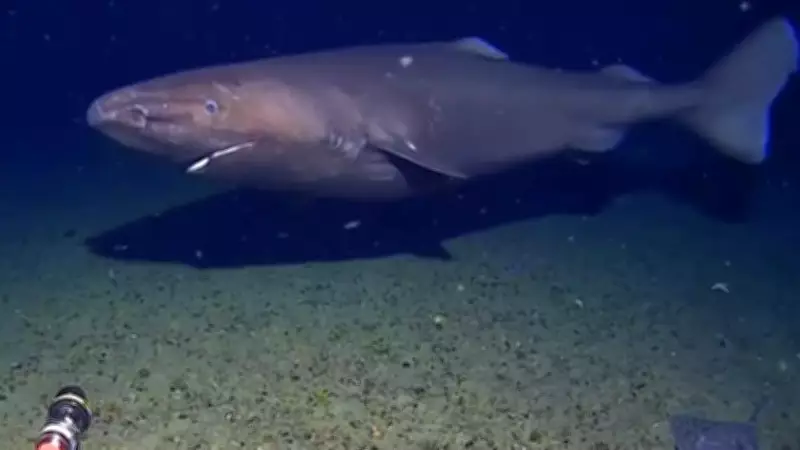
The sleeper shark, scientifically identified as Somniosus antarcticus, was captured on film in January 2025 by a deep-sea camera operated by the Minderoo-UWA Deep-Sea Research Centre. The groundbreaking footage was recorded near the South Shetland Islands, located off the Antarctic Peninsula, at a depth of approximately 490 meters (1,608 feet).
Researchers estimated the shark measured between 3 and 4 meters (10 to 13 feet) in length, making it a substantial predator. The water temperature at this depth was recorded at just above freezing, around 1.27°C, conditions previously thought too extreme for sharks to survive.

Scientific Significance and Expert Reactions
"There's a general rule of thumb that you don't get sharks in Antarctica. And it's not even a small one, it's a substantial animal. These things are like tanks," stated Alan Jamieson, founding director of the research centre at the University of Western Australia. The footage reveals the bulky predator moving slowly across a barren seabed, with a skate—a close relative of sharks—remaining motionless nearby, seemingly undisturbed by its presence.
Peter Kyne, a conservation biologist at Charles Darwin University who was not involved in the expedition, described the discovery as "quite significant." He emphasized that this rare footage provides invaluable insight into the largely unexplored deep-sea ecosystem of the Antarctic region, where no confirmed records of sharks living so far south had previously existed.
Possible Explanations and Environmental Context
Scientists speculate that sleeper sharks may have long existed in Antarctic waters but remained undetected due to several factors:
- The extreme environmental conditions that make observation challenging
- Limited deep-sea exploration equipment capable of operating in such harsh conditions
- Research cameras that can only function during the brief Antarctic summer months from December to February
Jamieson explained that the shark was likely maintaining its depth because it corresponded to a relatively warmer layer within the ocean's stratified water column. Antarctica's ocean waters form distinct layers due to temperature and density differences, influenced by melting ice and deep cold currents.
Ecological Implications and Future Research
The elusive predators are believed to feed primarily on carcasses of whales, giant squid, and other marine animals that sink to the ocean floor. While scientists acknowledge that climate change and warming oceans could potentially influence the range of marine species, it remains unclear whether environmental shifts played any role in this particular sighting.
Researchers are optimistic that more such discoveries could emerge as deep-sea exploration technology continues to improve. This groundbreaking observation opens new avenues for understanding polar marine ecosystems and challenges fundamental assumptions about species distribution in Earth's most extreme environments.