

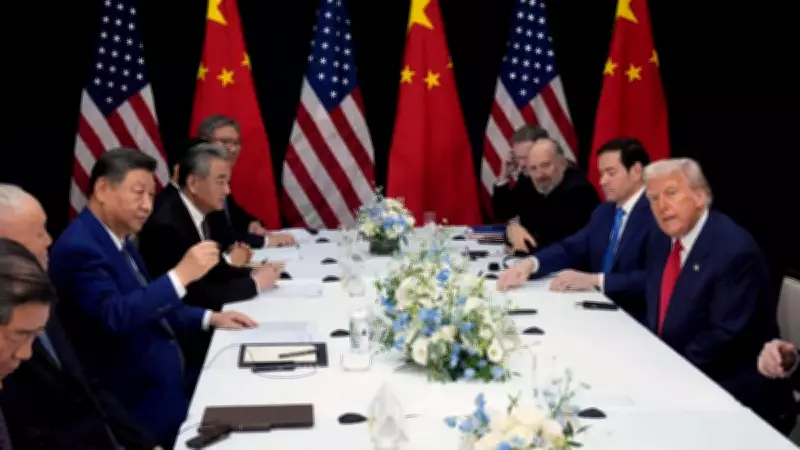
China Fires 'Don't Interfere' Warning to US Over Strait of Hormuz Blockade
In a significant escalation of geopolitical tensions, China has issued a stern warning to the United States, explicitly telling it not to interfere in matters concerning the Strait of Hormuz. This critical maritime chokepoint, located between the Persian Gulf and the Gulf of Oman, is a vital artery for global oil shipments, and any disruption here could have far-reaching consequences for international trade and energy security.
Escalating Tensions in a Key Global Waterway
The warning from China comes amid reports of a potential blockade in the Strait of Hormuz, a scenario that threatens to strangle the flow of approximately 20% of the world's oil supply. The strait is a narrow passage through which a significant portion of the world's seaborne crude oil passes daily, making it a focal point of strategic interest for nations worldwide. China's message to the US underscores the growing friction between the two superpowers over influence in this volatile region.
China's stance is clear: it views any US intervention in the Strait of Hormuz as an unwarranted intrusion into regional affairs. This position aligns with China's broader foreign policy objectives of asserting its influence in key global corridors and challenging US dominance. The warning was delivered through diplomatic channels, emphasizing China's commitment to protecting its economic and strategic interests, which are heavily reliant on stable maritime routes for energy imports.

Implications for Global Trade and Security
The potential blockade of the Strait of Hormuz poses severe risks to global economic stability. Disruptions in oil shipments could lead to skyrocketing fuel prices, supply chain bottlenecks, and increased inflationary pressures worldwide. For China, as the world's largest importer of crude oil, securing uninterrupted access to this waterway is a matter of national priority. The country relies heavily on oil imports from the Middle East, with a substantial portion transiting through the strait.
The US, on the other hand, has historically played a pivotal role in ensuring freedom of navigation in international waters, including the Strait of Hormuz. American naval presence in the region is aimed at deterring threats and maintaining open sea lanes. However, China's warning suggests a direct challenge to this role, potentially setting the stage for a confrontation that could destabilize the already tense Middle East.
Broader Geopolitical Context
This incident is not isolated but part of a larger pattern of escalating rivalry between China and the US. From trade wars to technological competition and military posturing in the South China Sea, the two nations are increasingly at odds over spheres of influence. The Strait of Hormuz adds another layer to this complex relationship, highlighting how energy security and maritime dominance are becoming central battlegrounds.
Key factors driving this tension include:
- Energy Dependence: China's growing energy needs make it vulnerable to disruptions in oil supply routes.
- Strategic Ambitions: Both nations seek to expand their military and economic footprints in critical regions.
- Diplomatic Maneuvering: The warning reflects China's assertive diplomacy aimed at countering US influence.
- Global Trade Concerns: Any blockade could trigger a cascade of economic problems affecting countries far beyond the Middle East.
As the situation develops, the international community is closely monitoring the responses from both China and the US. The outcome could reshape geopolitical alliances and impact global energy markets for years to come. For now, China's 'don't interfere' warning serves as a stark reminder of the fragile balance of power in one of the world's most crucial waterways.






