

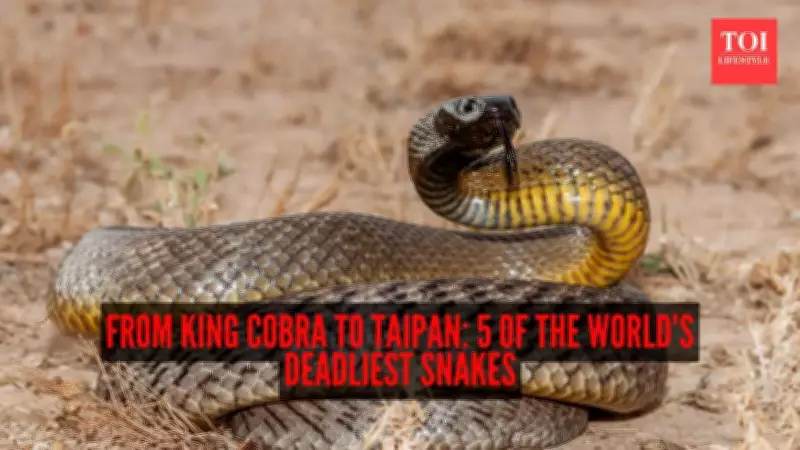
Five of the World's Deadliest Snakes: Understanding the Real Risks
Snakes are not typically a daily thought for most individuals, but when they do come into focus, they command immediate attention. Perhaps you have encountered viral videos showcasing a snake unexpectedly appearing in a kitchen, or clips where bystanders watch from a safe distance as a rescuer attempts to capture one. Even a simple walk through grassy fields or along quiet roadsides at night can suddenly feel unnerving when the possibility of a snake crossing your path enters your mind.
It is crucial to recognize that not all snakes present a serious threat to humans, and many species actively avoid contact whenever possible. However, certain snakes can be highly dangerous, particularly in regions where human activities and wildlife habitats intersect. This overlap increases the likelihood of accidental encounters, making awareness essential for safety.
Inland Taipan: The Most Venomous Yet Elusive
Often described as the most venomous snake globally, the inland taipan resides in remote, arid areas of Australia, far from densely populated zones. Due to its isolated habitat, human encounters with this snake are exceedingly rare. Its venom is extraordinarily potent, capable of causing severe harm, but the practical risk of encountering one in everyday life remains minimal, highlighting how remoteness can mitigate danger.

Coastal Taipan: A More Immediate Concern
In contrast, the coastal taipan is viewed as a more tangible real-world threat. It inhabits areas closer to human settlements, including farms and plantations, which elevates the probability of accidental interactions. Known for its speed and high alertness, this snake can react swiftly if disturbed, making it a significant concern in agricultural and residential settings.
King Cobra: The Majestic but Defensive Giant
There have been numerous reports of king cobras being sighted in villages or near residential areas, especially in regions adjacent to forests. In such scenarios, people typically maintain a safe distance and summon trained wildlife rescuers. When a king cobra raises its body and spreads its iconic hood, it is generally a defensive display intended to warn and create space, rather than an immediate precursor to an attack, underscoring its cautious nature.
Banded Krait: The Nocturnal Hazard
This species is primarily active during the night, which can make encounters harder to anticipate. For instance, in low-light conditions or without adequate visibility, spotting a banded krait may prove challenging. While it is not commonly associated with aggressive behavior, its venom is medically significant and potentially lethal to humans, rendering unnoticed encounters particularly risky due to the element of surprise.
Saw-Scaled Viper: A Common Threat in India
Among the snakes more frequently encountered in parts of India, the saw-scaled viper is found in dry regions, agricultural fields, and occasionally near human settlements. This behavior heightens the chances of accidental contact, especially during routine outdoor activities like farming or walking. It is also notable for producing a distinct rasping sound by rubbing its scales together, which can serve as a warning signal to alert nearby individuals.
Disclaimer: This article is for informational purposes only. Despite efforts to ensure accuracy, it should not replace professional medical or wildlife advice. Snakes are wild animals, and their behavior can be unpredictable. Readers are advised to avoid handling or approaching any snake and to contact trained wildlife authorities in case of a sighting. In the event of a snakebite or emergency, immediate medical attention should be sought.






