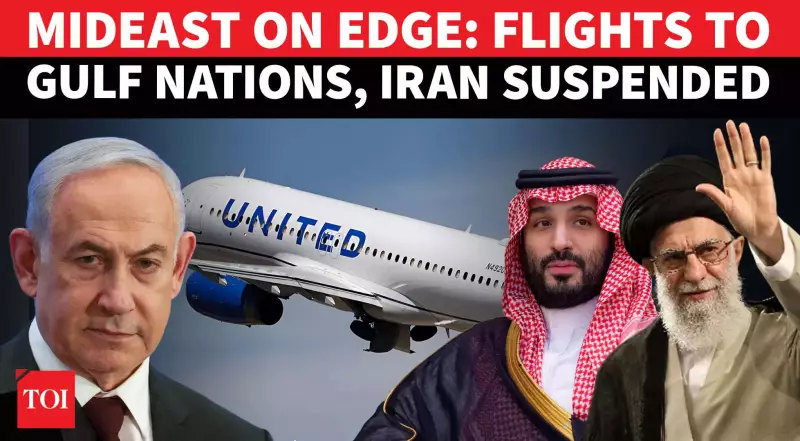
In a dramatic escalation of regional tensions, major international airlines have abruptly cancelled dozens of flights to Israel and key Gulf destinations, creating widespread travel disruptions and leaving passengers stranded across multiple continents. The coordinated cancellations, affecting routes from Europe and the United States, signal a severe deterioration in the security situation across the Middle Eastern airspace.
Major Airlines Suspend Services to Multiple Destinations
Leading carriers including KLM, Air France, British Airways, Lufthansa, and Swiss International Air Lines have suspended all services to Tel Aviv's Ben Gurion Airport. Simultaneously, several airlines have extended their flight cancellations to include major Gulf hubs such as Dubai, various cities in Saudi Arabia, and other United Arab Emirates destinations. This unprecedented multi-airline action has effectively ground international traffic to a halt at one of the region's busiest aviation hubs.
Security Concerns Trigger Widespread Aviation Shutdown
The flight cancellations followed urgent warnings from Türkiye's Foreign Minister Hakan Fidan, who publicly stated that Israel continues to seek opportunities to strike Iran. These diplomatic alerts coincided with visible increases in military deployments across the region, creating what aviation authorities describe as "heightened and unpredictable security risks" for civilian aircraft operations.

Airlines have cited "operational security concerns" and "evolving risk assessments" as primary reasons for the sudden service suspensions. Aviation analysts note that such coordinated action across multiple carriers typically occurs only during the most severe security situations, suggesting airlines have received specific intelligence about potential threats to civilian aviation in the region.
Passenger Chaos and Economic Impact
The abrupt cancellations have created chaos for thousands of travelers, with many passengers finding themselves stranded at airports without clear alternatives or timelines for resumption of services. Social media platforms have been flooded with images of unusually empty terminals and departure boards showing extensive cancellation notices.
The economic implications are significant, affecting not only airline operations but also tourism, business travel, and cargo transportation throughout the Middle East. The timing is particularly disruptive as it affects both business and leisure travel during a peak period for regional connectivity.
Regional Tensions Reach Aviation Sector
The aviation shutdown represents a tangible manifestation of the escalating geopolitical tensions that have been building across the Middle East. Military analysts observe that when civilian airspace becomes affected, it typically indicates that diplomatic channels have failed to contain the underlying conflicts.
Ben Gurion Airport, normally bustling with international arrivals and departures, now presents an eerie scene of minimal activity as airlines prioritize passenger and crew safety over operational continuity. Airport authorities have established emergency response teams to assist affected travelers, though options remain limited given the scale of cancellations.
International Response and Monitoring
International aviation authorities, including the International Civil Aviation Organization (ICAO) and various national aviation safety agencies, are closely monitoring the situation. Preliminary advisories suggest that airlines should exercise extreme caution when planning routes through or to the affected regions until security assessments improve.
The fluid nature of the situation means that flight schedules could change with minimal notice, creating additional challenges for airlines attempting to maintain some level of service while ensuring passenger safety remains the absolute priority.
As regional tensions continue to surge without immediate diplomatic resolution in sight, the aviation industry faces difficult decisions about when and how to resume normal operations. The current crisis serves as a stark reminder of how quickly geopolitical conflicts can disrupt global connectivity and affect ordinary travelers caught in circumstances beyond their control.