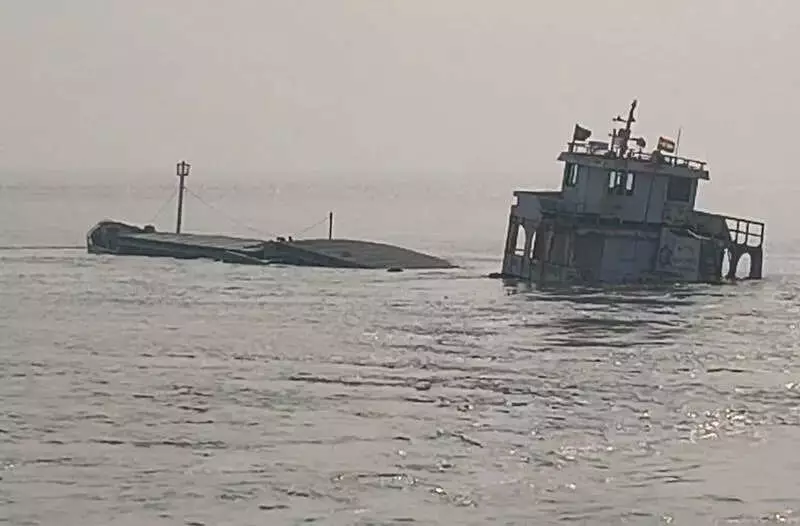
In Kolkata, escalating concerns over fly ash pollution have prompted authorities to ramp up operations to retrieve the Bangladeshi barge MV Tamjeed Nasir, which sank on a sandbar in the Muriganga river. The vessel was transporting a significant consignment of fly ash when it went down earlier this week, raising alarms about potential environmental hazards in the region.
Salvage Teams Assess Recovery Methods to Minimize Ecological Impact
Two specialized engineering and salvage teams are currently evaluating various recovery strategies to determine the most effective way to retrieve the vessel while causing minimal ecological damage. According to a member of the salvage team, large vessels typically carry up to 1,500 tonnes of fly ash, but MV Tamjeed Nasir is a smaller vessel with a capacity of approximately 650 to 700 tonnes. This incident highlights the ongoing practice of transporting fly ash from Indian power plants to Bangladesh, which has been occurring for over two decades.
Police Surveillance and Environmental Warnings Intensify
Police have deployed strict surveillance in the area to ensure that no fly ash is deliberately released into the river during the recovery process. However, fisherfolk and environmental experts have issued stark warnings about the serious consequences if the salvage operation is delayed. Satinath Patra, secretary of the Fishing Organisation of Kakdwip, emphasized that prolonged exposure to fly ash would severely affect fish populations, leading to a decline in fish density and directly impacting small-scale fishermen. He also noted that mangrove ecosystems in the region are at significant risk.

Scientific Insights into the Ecological and Health Threats
Dr. Debasis De, principal scientist and head of the Kakdwip Research Centre under ICAR–Central Institute of Brackishwater Aquaculture, provided detailed insights into the dangers posed by fly ash. He explained that fly ash can block sunlight, disrupt plankton photosynthesis, deposit heavy metals on the riverbed, and gradually enter the food chain, posing serious ecological and health threats. This underscores the urgency of the recovery efforts to prevent long-term damage to the river's biodiversity and the livelihoods of local communities.
As the salvage operation continues, stakeholders are closely monitoring the situation to mitigate risks and protect the fragile ecosystem of the Muriganga river.