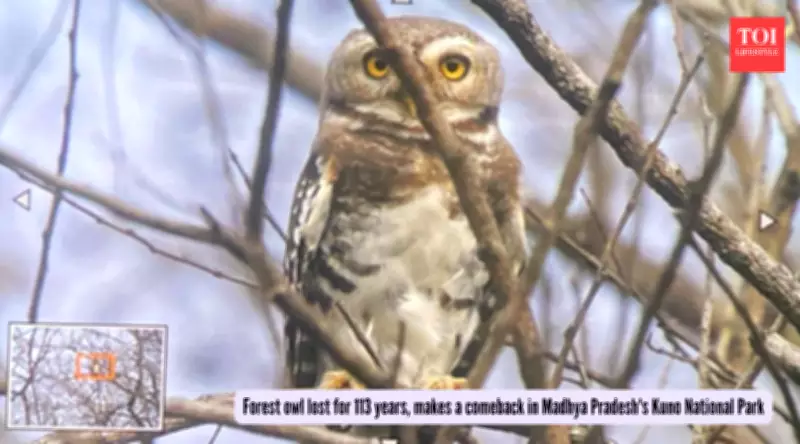
Forest Owlet Makes Historic Comeback in Kuno National Park After 113 Years
Indian forests are vibrant ecosystems that harbor countless species, yet many have vanished over time due to climate change and human encroachment. When a lost species returns, it is a true treasure for conservation. In a remarkable event, the Forest Owlet has been spotted in Kuno National Park in Madhya Pradesh, 113 years after its last confirmed sighting.
A Century-Long Disappearance and Rediscovery
The Forest Owlet, endemic to central India, was first documented in 1872 but disappeared after 1884, leading to fears of extinction for 113 years. It stunned the ornithological community with a rediscovery in 1997 in Maharashtra's Nandurbar district. Now, its presence in Kuno National Park adds a new chapter to this conservation story.
Spotting and Confirmation in Kuno
Local tourism operator Labh Yadav first observed the owl in the Parond Beat area of Kuno National Park, alerting forest officials due to its rarity. Vivek Patel from the Wildlife Research and Conservation Society in Pune confirmed the sighting on-site, marking the first official record of the species in Kuno, as reported by Hindustan Times.

Madhya Pradesh Chief Minister Dr. Mohan Yadav highlighted this progress on social media, calling it "a significant event for biodiversity conservation in India" and linking it to the ongoing cheetah reintroduction project in the park.
Kuno National Park's Growing Ecological Significance
Kuno, located in Sheopur district and famed for its cheetah conservation efforts, is home to diverse wildlife. This owlet sighting enhances its reputation as a thriving ecosystem. Previously, the Forest Owlet was known from scattered locations including:
- Madhya Pradesh: Khaknar and Piplod
- Maharashtra: Toranmal and Melghat
- Gujarat: Dang and Purna sanctuaries
In Madhya Pradesh, earlier sightings were limited to eastern districts like Khandwa, Burhanpur, and Betul, according to Nav Bharat Times.
Unique Characteristics and Conservation Status
Unlike most owls that hunt at night, the Forest Owlet is diurnal, actively hunting during morning hours from 6 to 10 a.m. It perches boldly on tall branches even in harsh sunlight. The International Union for Conservation of Nature (IUCN) classifies it as endangered, with an estimated global population of only 250 to 999 adults. Habitat loss remains a critical threat to its fragmented range.
Hope for Lost Species and Broader Ecosystem Revival
This rediscovery signals that conservation initiatives, such as the cheetah project, are revitalizing broader ecosystems and bringing back endangered species. As Kuno prepares for more cheetah introductions, the return of the Forest Owlet demonstrates the project's success in fostering biodiversity. It offers hope for the recovery of other lost species and underscores the importance of protected habitats in India.