A remarkable discovery across South America is forcing scientists to rewrite chapters of prehistoric history. Enormous underground tunnels, found in Brazil, Argentina, and Uruguay, were long a subject of mystery. Their sheer size and precise construction initially baffled researchers, who considered human activity. However, new evidence has conclusively shifted the blame to a far more ancient architect: the extinct giant ground sloth.
The Enigma of the Giant Palaeoburrows
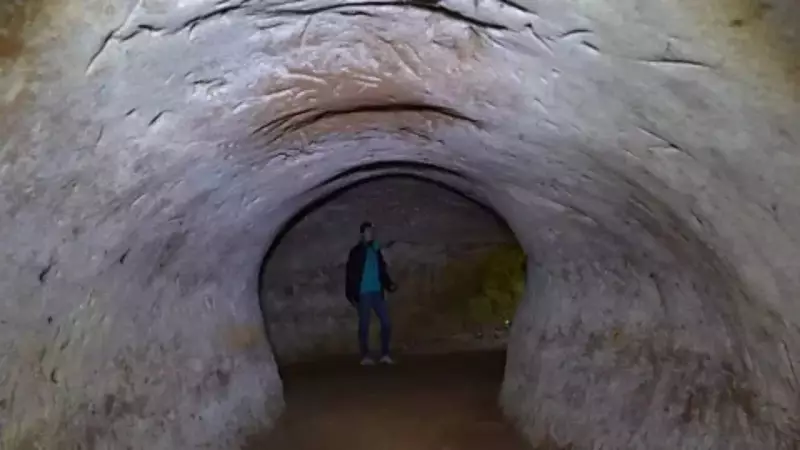
These massive subterranean structures, known scientifically as palaeoburrows, are far from simple holes. They stretch for tens of meters, with some extending for miles, and are large enough for a person to walk through comfortably. The smooth, uniformly curved walls show clear signs of purposeful excavation, unlike the irregular patterns left by natural geological processes like water flow.
Geological analysis confirms the tunnels were dug into moderately soft rock and compacted sediments tens of thousands of years ago. This timeline predates sustained human presence in many of these regions. Crucially, the tunnels lack any signs of human habitation—no tool marks, fire pits, or artefacts. They are found in areas that were ancient grasslands and forests, not known human settlements, further ruling out human miners or settlers as their creators.

Fossilised Footprints: The Smoking Gun
The most compelling proof comes from the tunnels themselves. Fossilised footprints and deep, parallel claw marks etched into the walls and floors tell a clear story. These impressions match the unique toe structure and weight distribution of massive prehistoric animals.
The analysis points directly to giant ground sloths like Lestodon and Glossotherium. These behemoths, part of the Pleistocene megafauna, possessed huge forelimbs with long, curved claws—perfect tools for digging. The slow, powerful gait indicated by the tracks rules out humans or smaller animals. The absence of any human footprints inside the tunnels adds further weight to the theory that these were exclusively animal-made and used structures.
Why Did Giant Sloths Build These Mega-Burrows?
Understanding the "why" offers a window into the survival strategies of these ancient creatures. Experts believe these colossal burrows served as critical shelters. The stable underground temperature would have provided protection from predators and harsh climatic shifts during the late Pleistocene, such as cooler or drier periods.
The depth and orientation of many tunnels suggest they were designed to avoid flooding and maximize insulation. This behaviour finds parallels in modern burrowing animals like armadillos, but on a monumental, megafaunal scale. For a large, slow-moving creature like a ground sloth, a secure underground refuge would have been a vital survival asset. The repeated scraping on the walls indicates these were not temporary digs but frequently used, possibly intergenerational, homes.
Reshaping Our View of Ancient Ecosystems
This discovery has profound implications. It positions giant ground sloths not as passive inhabitants of their environment, but as active "ecosystem engineers." Their digging would have altered soil composition, affected water drainage, and created micro-habitats for other species.
This challenges the anthropocentric view that humans were the sole large-scale modifiers of the ancient environment. It also highlights the immense ecological void left by the extinction of such megafauna. By studying these palaeoburrows, scientists gain tangible, physical evidence of how prehistoric ecosystems functioned, moving beyond speculation to grounded understanding. The tunnels stand as a lasting testament to the underestimated power and influence of Earth's lost giants.