

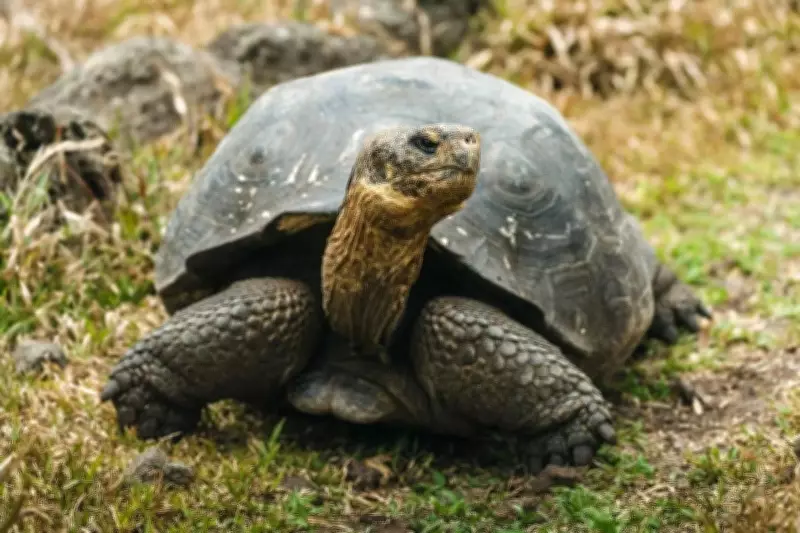
Giant Tortoises Reintroduced to Floreana Island After 150-Year Absence
In a historic conservation milestone, giant tortoises are once again roaming Floreana Island in the Galápagos archipelago, marking their return after vanishing more than 150 years ago. This ambitious reintroduction effort is spearheaded by the Galápagos National Park Directorate and the Galápagos Conservancy, with crucial technological support from NASA's Earth observation satellites.
Scientific Approach Combines Satellite Data and Field Research
Scientists are employing sophisticated habitat suitability models that integrate NASA satellite data from missions like Landsat and Terra with decades of field observations. This comprehensive approach analyzes vegetation cover, rainfall patterns, land surface temperatures, and climate records to identify optimal release locations where tortoises can find adequate food, water, and nesting grounds.
On February 20, conservationists released 158 tortoises at two carefully selected sites on Floreana Island. The release represents more than just species reintroduction—it aims to restore fundamental ecological processes that have been missing since the tortoises disappeared.

Historical Extinction and Ecological Consequences
Giant tortoises once moved freely across Floreana Island until the mid-nineteenth century when whalers heavily hunted them for fresh meat during their voyages. Simultaneously, invasive species including pigs and rats—introduced by visiting ships—began consuming tortoise eggs and hatchlings, leading to the complete collapse of the local population.
The absence of these ecosystem engineers dramatically altered the island's landscape. Giant tortoises perform crucial ecological functions including grazing vegetation, creating pathways through dense growth, and dispersing seeds through their digestive systems. Without them, plant distribution patterns shifted significantly, with some areas becoming overgrown while others experienced subtle, gradual changes.
Genetic Discovery and Breeding Program Success
The path to reintroduction began with a remarkable genetic discovery in 2000. Researchers working near Wolf Volcano on Isabela Island encountered tortoises with unusual physical characteristics that didn't match known living species. Subsequent DNA analysis comparing museum specimens and cave remains revealed these animals carried genetic ancestry from the extinct Floreana tortoise lineage.
This discovery initiated a comprehensive breeding program where eggs were collected and young tortoises were raised under controlled conditions. Over years of dedicated effort, hundreds of tortoises have been produced, many now reaching sizes sufficient for survival in the wild. Scientists theorize that whalers may have inadvertently preserved fragments of the Floreana lineage by transporting tortoises between islands centuries ago.
NASA Satellite Guidance for Long-Term Planning
Selecting appropriate release sites presented significant challenges due to the Galápagos' diverse microclimates. Some regions remain cool and moist with persistent cloud cover, while others experience extended dry periods. Tortoises naturally migrate between these zones, sometimes covering considerable distances.
NASA's satellite data provides critical insights into vegetation dynamics, precipitation patterns, and thermal conditions. Researchers combine this information with millions of field location points collected over decades to create predictive models that estimate not only current habitat suitability but also how conditions may evolve over the coming 20 to 40 years. This forward-looking approach is essential since giant tortoises can live for more than a century.
Comprehensive Ecological Restoration Project
The tortoise reintroduction forms a central component of the broader Floreana Ecological Restoration Project, which includes ongoing efforts to eliminate invasive mammals such as rats and feral cats. The long-term vision involves reintroducing 12 native species to reestablish the island's ecological equilibrium.

Over the past six decades, more than 10,000 tortoises have been raised and released throughout the Galápagos archipelago. Each island requires tailored conservation strategies due to unique terrain and climatic conditions. On Floreana, the process unfolds deliberately as tortoises gradually adapt to their new environment in scrub and grassland habitats. The full ecological impact of this restoration effort will require years of careful monitoring and assessment.





