

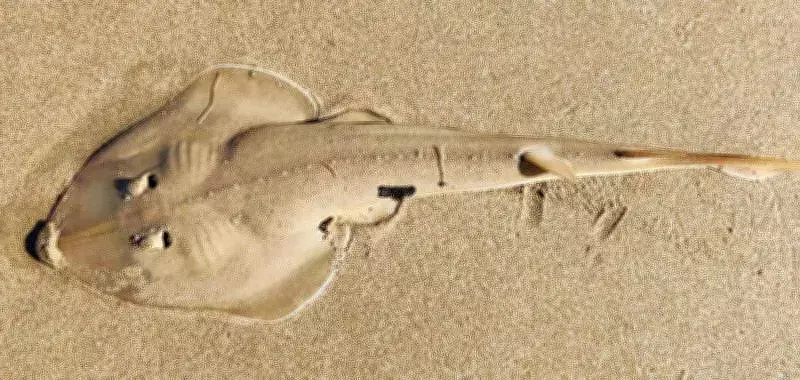
Conservation Efforts Intensify for Goa's Critically-Endangered Widenose Guitarfish
The widenose guitarfish, a critically-endangered marine species found off the coast of Goa, does not feature among the state's commercially significant fish delicacies. However, its already dwindling population confronts escalating threats, primarily from an external factor: accidental capture as bycatch in fishing nets. Unlike the sting ray, which is highly sought after by locals and tourists for dishes like ambott tik, the widenose guitarfish (Glaucostegus obtusus) has experienced substantial population declines over recent years due to unintended catching by both small-scale and large-scale fishers.
Research and Monitoring Initiatives for Long-Term Protection
There is renewed hope for this species, with ongoing efforts to include it in the IUCN Red List. Researchers are actively collaborating with the Goa Forest Department in a comprehensive, long-term project aimed at studying and monitoring guitarfish populations along the state's shoreline. The research focuses on assessing the distribution of this species from the guitarfish family (Glaucostegidae) to develop effective conservation strategies.
"The forest department has reacted positively to our conservation plans, and initially, we propose to identify critical guitarfish habitats across Goa," stated marine biologist and researcher Bryan Miranda. This initiative gains momentum following a significant conservation boost from the Union government, which included the widenose guitarfish in Schedule 1 of the Wildlife Protection Act, 1972, over two years ago. Consequently, catching, selling, or consuming this species has been designated a criminal offense.

Challenges and Ecological Significance of Guitarfish Conservation
Conservationists highlight that coastal development and pollution have likely contributed to habitat degradation, exacerbating the threats faced by the widenose guitarfish. The conservation of this fish in Goa holds particular importance because large groups are found off the state's coast. Juveniles of the guitarfish, which hold no commercial value, often get caught in small-scale fisheries, and their release could play a crucial role in sustaining population levels.
"We feel that all elasmobranch species, including guitarfish that inhabit coastal ecosystems, need to be studied comprehensively and conserved," emphasized G.B. Sreekanth, a fisheries scientist at CCARI-ICAR in Old Goa. Elasmobranchs, which include sharks, rays, and skates, are cartilaginous fishes. In India, only four to five guitarfish species are present, but most ecological data on these species relies heavily on information collected at fish landing sites. This reliance may lead to inaccuracies in assessing population declines, as many similar-looking species are often grouped together in reports.
Uncertain Impacts and Conservation Strategies
Due to these data gaps, conservationists remain uncertain about the potential cascading effects if the widenose guitarfish were to be wiped out. "These species are an important part of the food web. They are considered mid to top-level predators," Miranda explained. Interestingly, the low commercial value of this highly threatened species works in favor of its conservation, as it is not typically targeted by fishermen. "Most of them are not targeted by small and large-scale fishermen. Basically, we plan to monitor the extent of catch at various locations," he added.
Reports indicate that widenose guitarfish are caught all along Goa's coast. In a notable development, the IUCN has classified Talpona and Galgibaga beaches as Important Shark and Ray Areas (ISRAs). "This indicates that these sites offer foraging and shelter habitats for elasmobranchs, especially guitarfish," Sreekanth noted. Another critical factor aiding conservation efforts is the species' ability to survive outside water for some time, which is vital for developing effective protection measures.
"We plan to sensitize stakeholders while keeping in mind their needs as well, to promote live release as a potential conservation measure," Miranda concluded, underscoring the collaborative approach needed to safeguard this endangered marine inhabitant.






