

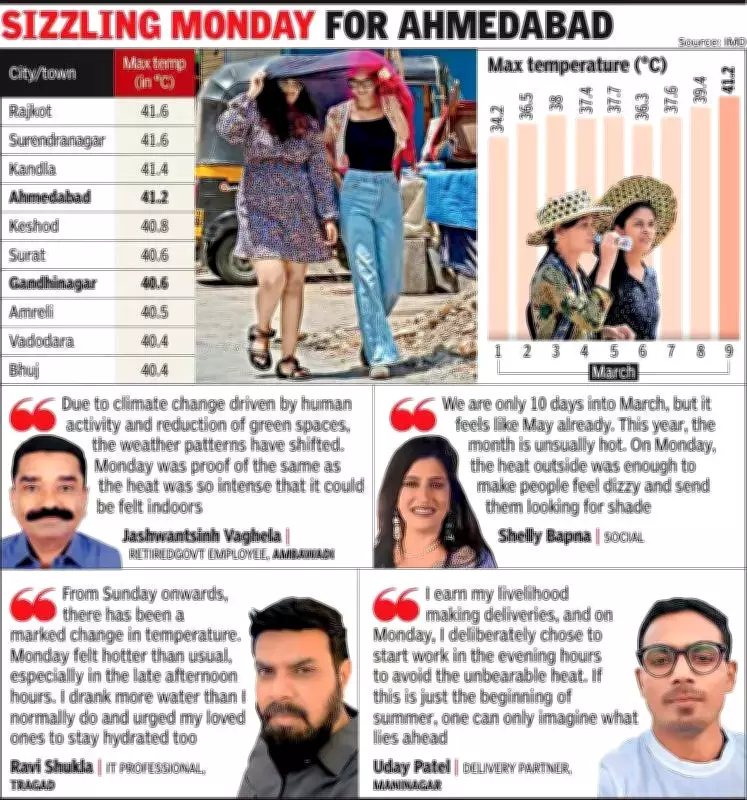
Gujarat Gripped by Intense Heatwave as Temperatures Skyrocket
Ahmedabad endured a blistering Monday, with the mercury soaring to a scorching 41.2°C, a staggering seven degrees above the seasonal normal. The oppressive heat offered no respite, as even the minimum temperature settled at 21.8°C, which is 3.9 degrees higher than usual. This extreme weather marks just the beginning of summer and coincides with the first day of a three-day yellow alert issued by the India Meteorological Department (IMD) for multiple districts across Gujarat.
IMD Issues Widespread Yellow Alert Across State
The IMD has activated a yellow alert for Banaskantha, Patan, Mehsana, Gandhinagar, Ahmedabad, Vadodara, Bharuch, Surat, Surendranagar, Rajkot, Porbandar, Junagadh, Amreli, Bhavnagar, Morbi, Botad, and Kutch. According to the meteorological department, hot and humid conditions are likely to prevail across coastal areas from south Gujarat to Kutch. For Tuesday, Ahmedabad is expected to see a maximum temperature around 41°C and a minimum near 22°C, indicating continued discomfort for residents.
Residents Struggle with Unprecedented Early Heat
Sagarika Shah, a marketing executive from Prahladnagar, shared her ordeal: "I have to travel extensively for work, and today's heat was overwhelming. Despite staying hydrated, I felt uneasy throughout the day." The forecast predicts no change in maximum and minimum temperatures across Gujarat for the next three days. After this period, the maximum temperature is anticipated to drop by 2-3 degrees, while the minimum will remain unchanged.

Meteorological Factors Behind the Sudden Temperature Spike
Ashok Kumar Das, head of IMD Ahmedabad, explained that the sudden temperature rise is due to northerly and north-westerly winds bringing hot air from Rajasthan. "Since early March typically has lower temperatures, the deviation from normal is more pronounced at several weather stations, leading to the yellow alert," he stated. Analysis of historical data shows that Gujarat usually experiences maximum temperatures above 40°C in the latter half of March, often in the last week. However, this trend shifted in 2025, when Ahmedabad recorded temperatures around 40°C by the third week.
Long-Term Forecast and Climate Implications
This year, the heat has arrived earlier than usual, with temperatures exceeding norms just over a week into March, attributed to changes in wind patterns. Meteorologists note that the IMD's long-range forecast for March predicts above-normal temperatures for the region, raising concerns about an intensified summer season ahead. The early onset of such high temperatures underscores potential climate shifts and highlights the need for preparedness among the public and authorities.






