Gurgaon's 2026 Greening Initiative: A 37-Kilometer Push Focused on Monsoon Months
The city of Gurgaon has charted an ambitious plan to add nearly 37 kilometers of fresh greenery across central road verges and pedestrian pathways in 2026. This multi-agency action plan strategically leans on the monsoon season to maximize plantation survival and effectiveness.
Detailed Breakdown of Greening Targets
According to the comprehensive blueprint, the greening work will encompass 23.3 kilometers of central verges and 14 kilometers of pathways. This initiative builds upon the existing green infrastructure, where approximately 198 kilometers of verges and 219 kilometers of pathways already boast greenery throughout the city.
Data submitted to the Commission for Air Quality Management (CAQM) reveals the current distribution of greened verges. The Gurugram Metropolitan Development Authority (GMDA) maintains the largest share at 145.81 kilometers. Other significant contributors include the Public Works Department (PWD) with 22.21 kilometers, the National Highways Authority of India (NHAI) with 18 kilometers, the Haryana Shahari Vikas Pradhikaran (HSVP) with 6.76 kilometers, and the Municipal Corporation of Gurugram (MCG) with 5.2 kilometers.

Agency-Specific Targets for 2026
The 2026 plan allocates new greening targets for central verges among key agencies. NHAI leads with an ambitious 18 kilometers, followed by GMDA with 2.8 kilometers, and MCG with 2.5 kilometers. Notably, the plan shows no greening activity scheduled from January to May, with all work commencing in June and peaking between July and September.
NHAI accounts for the largest portion, scheduling 5 kilometers each in July, August, and September, with smaller additions planned towards the end of the year. GMDA's contributions are slated between August and October, while MCG's targets are spread across March to May.
Pedestrian Pathway Development: Paving Takes Priority
On pedestrian infrastructure, approximately 235 kilometers of pathways have already been paved under the efforts of GMDA, HSIIDC, and MCG. Currently, about 220 kilometers of pathways are greened, primarily by GMDA and NHAI.
For 2026, the plan prioritizes paving over greening for pathways. A total of 104.75 kilometers is proposed to be paved, with MCG responsible for nearly 69 kilometers. Most of this paving work is planned for October to December.
In contrast, only 14 kilometers of pathways is proposed to be greened. Of this, NHAI will undertake 13 kilometers, largely during the monsoon months, while MCG has a token 1 kilometer scheduled for December.
Heavy Reliance on Monsoon and Implementation Challenges
Overall, the plan depends heavily on the June–September monsoon period, with minimal work planned in the first five months of the year. Civic officials explained that this scheduling reflects concerns about plantation survival rates, as monsoon rains provide optimal conditions for new greenery to take root.
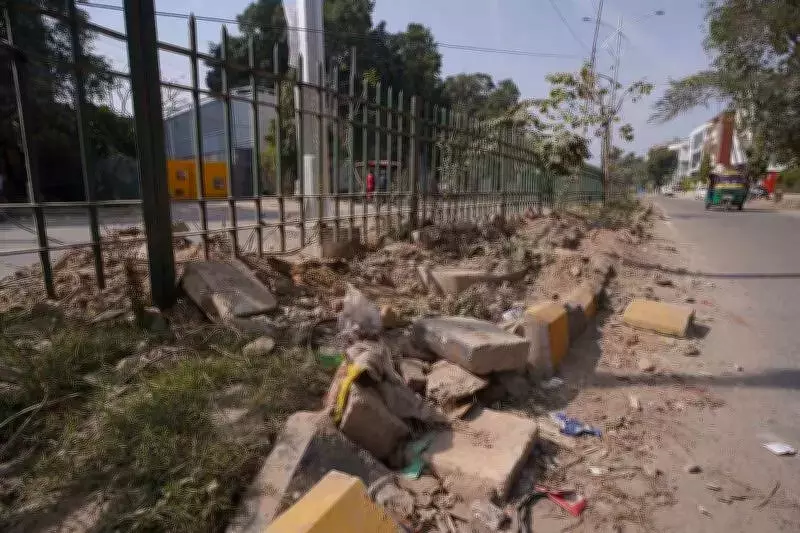
Urban planners noted that such delayed execution often leads to year-end rushes and incomplete maintenance cycles. An officer from the Haryana State Pollution Control Board (HSPCB) commented, "The programme will expand Gurgaon's roadside green cover, which is crucial for environmental health." However, he pointed out ongoing challenges: "Dust from construction sites, broken pavements, unpaved roads, and waste burning continue to push up PM10 levels, underscoring the need for comprehensive air quality management."
This greening initiative represents a significant step in Gurgaon's urban development strategy, aiming to enhance green cover while addressing practical implementation hurdles tied to seasonal patterns and multi-agency coordination.