Haryana Initiates Comprehensive Farm Mapping to Address Wheat Stubble Burning Crisis
In a significant move to combat springtime air pollution, Haryana is launching an extensive exercise this year to map every farm in its villages. The initiative aims to specify, plot by plot, how wheat residue will be managed during the harvest season, targeting a major pollution source in the National Capital Region (NCR).
New Directions from Air Quality Commission Drive Action
The decision follows fresh directives from the Commission for Air Quality Management (CAQM), which has intensified scrutiny of wheat-season fires after a notable spike across north India last year. While wheat residue burning has historically received less attention than paddy fires, CAQM now identifies it as a key contributor to pollution during April and May.
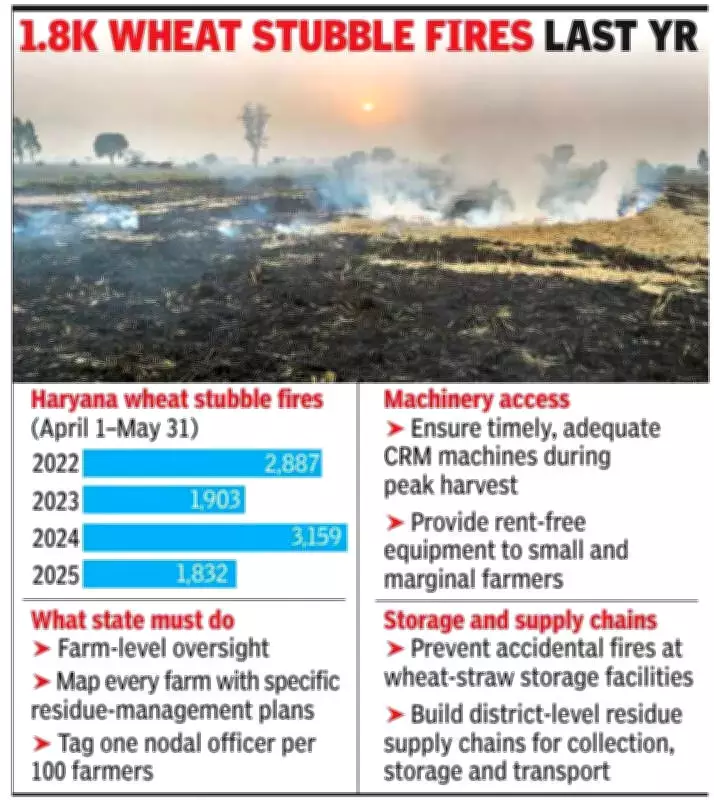
During the 2025 wheat season, Haryana recorded 1,832 fires between April 1 and May 31. In comparison, Punjab logged over 10,200 incidents, and NCR districts of Uttar Pradesh reported 259 fires. Officials attribute the increase to several factors, including labor shortages, high costs for residue handling, and limited availability of crop residue management machinery during peak harvesting periods. Additionally, a shift towards wheat cultivation, supported by assured procurement, has led to higher residue volumes.

Farm-by-Farm Management Plan and Monitoring
In response, Haryana has been directed to implement a detailed farm-by-farm management plan. This plan will specify whether straw will be:
- Incorporated into the soil
- Used as fodder
- Diverted for ex-situ applications
- Managed through crop diversification
To ensure tighter monitoring, each district must assign nodal officers to farmers, with one officer responsible for no more than 100 cultivators. A senior agriculture department official stated that Haryana has already begun preparing implementation plans. "This wheat season, our focus is on strict field-level monitoring and ensuring that every farmer gets access to the machinery and support needed to avoid burning. We are implementing systems so that no farmer should feel burning is the only option," the official emphasized.
Addressing Machinery Shortages and Infrastructure Needs
A key aspect of the directive is ensuring timely and adequate availability of machinery. States have been instructed to provide access through a mobile app and guarantee that small and marginal farmers receive rent-free equipment via custom hiring centers. The commission highlighted that machinery shortages during the narrow harvesting window remain one of the biggest triggers for burning.
Haryana has also been asked to strengthen wheat-straw storage infrastructure to prevent accidental fires and maintain stable fodder supplies throughout the year. Each district must develop a residue supply chain to enable rapid collection, storage, and transport for industries that can utilize the straw.
Enhanced Enforcement and Awareness Campaigns
To tighten enforcement, CAQM has directed the state to form a dedicated "parali protection force" at district and block levels. This task force, comprising police, agriculture officials, and local administrators, will conduct intensive patrolling, particularly during late evenings and nights when farmers often set fields on fire to avoid satellite detection.
The regulator has also called for strict imposition and recovery of environmental compensation from violators, alongside large-scale awareness campaigns. These campaigns will educate farmers on alternatives to burning and highlight the health risks associated with crop-residue fires.
Ongoing Monitoring and Reporting Requirements
Haryana, along with Punjab and Uttar Pradesh, must submit monthly progress reports to CAQM. The commission noted that it will closely monitor compliance, emphasizing that wheat stubble burning, once considered a relatively minor issue, has evolved into a serious and under-recognized threat to NCR's air quality during spring.