

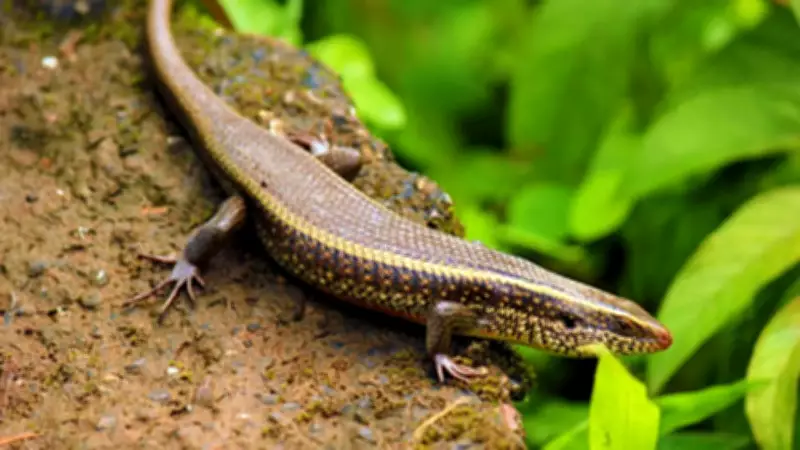
Hidden Kungaka Skink: Australia's Rarest Reptile With Only 20 Left
An endangered reptile that had remained unnoticed for decades has been confirmed as one of the rarest reptiles in all of Australia. According to recent discoveries by scientists and conservationists, the Kungaka Skink, which occurs exclusively in Mutawintji National Park, Australia, is a unique species with only about 20 specimens in existence, making it officially the rarest reptile in Australia.
Decades of Misidentification and Recent Genetic Breakthrough
This groundbreaking discovery comes after several years of intensive investigation during which the skink was mistakenly thought to be a common member of the widespread White's skink family. Through meticulous analysis of genetics and morphology, researchers have definitively proven that this is a distinct and unique species occurring only in Australia. The Kungaka's name, meaning 'hidden one,' was bestowed by the Wiimpatja Traditional Owners due to its exceptionally secretive behavior.
Scientists were able to establish that the animal is quite different from other similar lizards such as the southern and northern White's skinks. While its relatives enjoy more wide-ranging habitats across various parts of Australia, the Kungaka lives in a very confined area, hiding among rocks in otherwise arid surroundings.

Ancient Lineage and Specialized Habitat
Scientific study has revealed that the Kungaka skink belongs to a very ancient group that evolved during a period when Australia's climate was significantly more humid. With the onset of drier environmental conditions, the Kungaka adapted by seeking refuge in small areas with water availability. Presently, these skinks inhabit rocky cracks and canyons along the escarpments of Mutawintji National Park.
This particular habitat provides crucial shelter against harsh temperatures and environmental extremes, enabling their survival through major climate changes over millennia. Such findings were detailed in the comprehensive study titled "Phylogenomics, taxonomy and conservation of the White's skink (Scincidae: Liopholis whitii) species complex in south-eastern Australia."
Critically Low Population Raises Immediate Extinction Risk
Current surveys indicate fewer than 20 members of the species exist in the wild, rendering the species highly vulnerable to extinction. Experts have described the population as "functionally extinct," referring to the critically low number of remaining individuals. The species is expected to be formally classified as critically endangered under environmental legislation, which would enable more robust protective measures to increase its numbers.
Multiple Threats Accelerating Decline
Several interconnected dangers are hastening the Kungaka's extinction:
- Predator pressure from cats, foxes, snakes, and goannas
- Habitat destruction by feral animals like goats that damage vegetation and rocky environments
- Climate change impacts including rising temperatures and persistent drought that further limit suitable habitats
These threats compound the species' precarious situation, requiring immediate intervention.
Conservation Initiatives and Cultural Significance
Conservation efforts have begun to preserve the species through habitat restoration and reduction of harmful invasive species. Conservationists, local communities, and scientists are collaborating to monitor lizard populations and develop strategies to increase their numbers.
The recognition of the Kungaka as a separate species is crucial because it enhances the effectiveness and specificity of conservation efforts. Preserving this lizard holds both biological and cultural significance, as the region maintains important heritage connections with the Traditional Owners who named this 'hidden one.'
This discovery underscores the importance of continued biodiversity research and conservation in Australia's unique ecosystems, where hidden treasures like the Kungaka Skink await both discovery and protection from imminent extinction.






