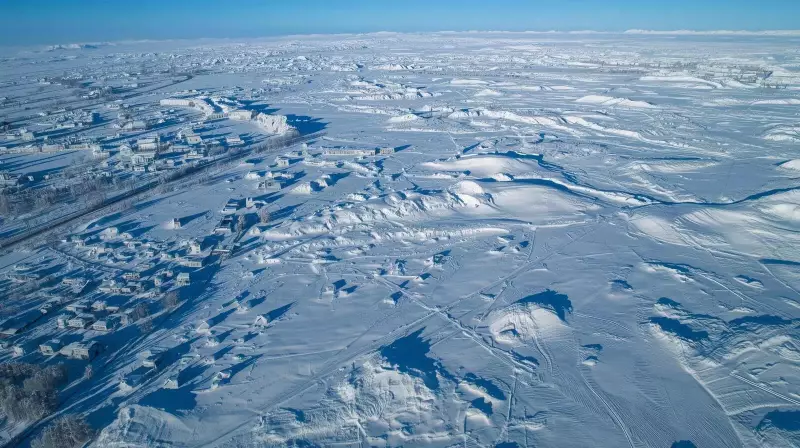
Historic Snowfall Paralyzes Russia's Kamchatka Peninsula
Extensive snowfall has enveloped vast regions of Russia's Kamchatka Peninsula following weeks of intense winter weather conditions. The months of December and January delivered successive storms and prolonged cold spells that gradually accumulated across urban settlements, transportation networks, and open landscapes.
Unprecedented Accumulation Disrupts Daily Life
Local meteorological reports indicate snowfall levels not witnessed for multiple decades, with several meters of accumulation occurring within remarkably brief periods. The broader atmospheric conditions have remained unusually unstable throughout this winter season, with high-altitude wind patterns influencing weather systems far beyond Arctic boundaries.
While Kamchatka residents are accustomed to severe seasonal weather, the current winter has demonstrated exceptional persistence. Satellite observations now reveal substantial portions of the peninsula completely covered, with its distinctive volcanic topography subdued beneath continuous snow layers, forcing communities to adapt as conditions show minimal improvement.

Urban Centers Struggle Under Snow Burden
In Petropavlovsk Kamchatsky, routine mobility has become increasingly challenging as snowfall continues unabated. Roadways have significantly narrowed, while automobiles have disappeared beneath substantial snowdrifts. Building entrances have experienced repeated blockages, sometimes requiring multiple clearance efforts.
Public transportation systems have operated intermittently, with frequent suspensions and restarts. Residents describe simple pedestrian movements transforming into arduous undertakings. Emergency response teams have concentrated on maintaining essential routes, though progress has been inconsistent across different areas.
Snow accumulation has reached lower window levels in certain locations. The weight buildup has been progressive rather than immediate, with each successive storm adding to existing deposits, leaving minimal opportunity for clearance operations to achieve meaningful progress.
Atmospheric Patterns Drive Prolonged Conditions
Scientific analysis from NASA indicates significant atmospheric alterations earlier in the season. A sudden stratospheric warming event near the Arctic region weakened the polar vortex, facilitating increased mobility of cold air masses. The jet stream has exhibited reduced stability, bending and shifting in configurations that favor recurrent storm development.
Kamchatka's geographical positioning creates conditions where frigid northern air interacts with Pacific moisture. When this atmospheric equilibrium persists, snowfall can continue unabated. This particular winter has maintained this pattern without significant interruption, resulting in sustained low temperatures and extended snowfall beyond typical expectations.
Satellite Documentation Reveals Extensive Coverage
Mid-January imagery captured by NASA's Aqua satellite displays fresh snow distribution across Kamchatka's mountainous regions and valley systems. Volcanic peaks appear as pale circular formations against darker terrain, maintaining recognizable shapes but exhibiting more extensive coverage than customary patterns.
Avacha Bay maintains open water conditions influenced by deeper oceanic currents, while surrounding land areas remain buried beneath snow. Scientific researchers utilize these visual records to validate surface observations and monitor snow distribution and persistence. While these images don't provide comprehensive explanations, they effectively illustrate both the magnitude of accumulation and the limited movement of deposited snow.
Geographical Factors Intensify Winter Extremes
The peninsula's steep mountainous formations rise abruptly from coastal areas, significantly influencing storm behavior. Moist air masses elevate, cool, and release precipitation as they progress inland. Storm systems frequently intensify while traversing this terrain, depositing heavier snowfall before reaching populated centers.

Although residents possess familiarity with these meteorological rhythms, historical records suggest recent accumulation totals compare with winter seasons from the 1970s. Such extreme conditions impose subtle pressures on housing infrastructure, transportation networks, and power distribution systems. Currently, snow accumulation persists, and daily routines continue to accommodate rather than overcome these challenging environmental conditions.