Hungary Deploys Military Forces to Secure Energy Assets Amid Escalating Ukraine Dispute
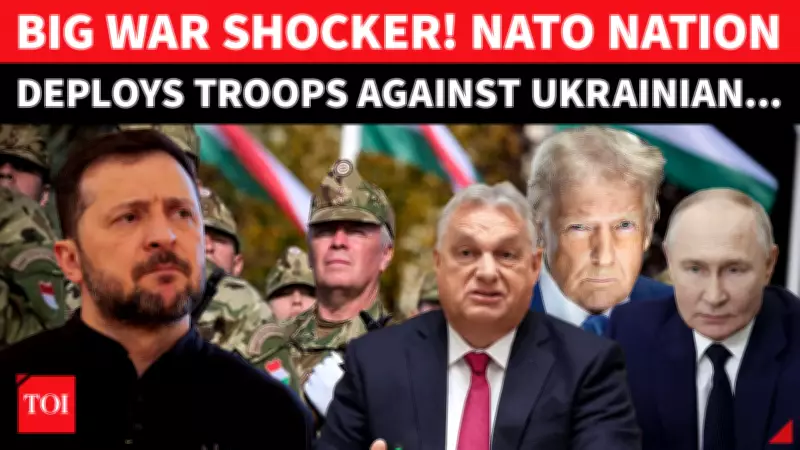
In a significant escalation of regional tensions, Hungary has deployed troops to guard critical energy infrastructure following a dispute with Ukraine over disrupted oil flows through the Druzhba pipeline. Prime Minister Viktor Orban has accused Kyiv of blocking the transit of Russian crude and issued a firm declaration that Hungary "will not yield to blackmail." This military move underscores the deepening rift between Budapest and Brussels, transforming energy security into a volatile geopolitical flashpoint.
Troop Deployment and Security Measures
Hungarian soldiers have been stationed at strategic energy sites to ensure their protection against potential threats. Additionally, authorities have imposed a drone flight ban near the Ukrainian border to prevent unauthorized surveillance or attacks. These security measures reflect Budapest's heightened concerns over the stability of its energy supply, which has been jeopardized by the ongoing conflict between Russia and Ukraine.
Accusations and Diplomatic Fallout
Prime Minister Orban's accusations against Ukraine center on the alleged obstruction of Russian crude oil transit through the Druzhba pipeline, a vital conduit for Hungary's energy needs. The disruption has exacerbated existing tensions, with Orban framing the situation as an act of coercion. This stance has further strained Hungary's relations with the European Union, as Budapest's alignment with Russian energy interests clashes with broader EU policies aimed at reducing dependence on Moscow.

Broader Implications for European Energy Security
The deployment of troops highlights how the Russia-Ukraine war is increasingly spilling into Europe's energy networks, moving beyond mere pipeline disputes to encompass issues of power, pressure, and political brinkmanship. As energy security becomes a central battleground, the crisis threatens to destabilize regional alliances and complicate diplomatic efforts to resolve the conflict. The situation underscores the fragile balance between national interests and collective European security strategies.
With tensions intensifying, the international community watches closely as Hungary's actions could set a precedent for other nations grappling with similar energy vulnerabilities. The unfolding scenario emphasizes the urgent need for coordinated responses to safeguard critical infrastructure and maintain stability in an increasingly polarized geopolitical landscape.