IISc Scientists Urge 5km Eco-Sensitive Zone for Bannerghatta National Park
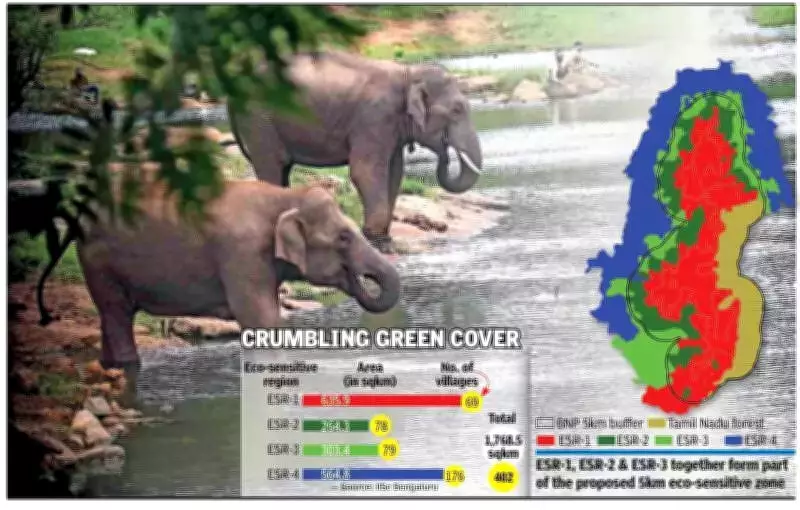
In Bengaluru, a critical legal and policy debate is intensifying over the eco-sensitive zone (ESZ) surrounding Bannerghatta National Park (BNP), located on the city's outskirts. Ecological researchers from the prestigious Indian Institute of Science (IISc) have put forward a comprehensive proposal advocating for a 5km ESZ buffer. This buffer would encompass a vast area of 1,768.4 square kilometers, impacting over 400 villages adjacent to the protected park.
Addressing Ecological Threats Through Scientific Assessment
The IISc team's recommendation stems from a detailed scientific study that highlights severe forest degradation, rapid urban expansion, and irreversible ecological risks along the park's periphery. The scientists conducted an extensive assessment using temporal remote sensing data, government agency records, and field investigations carried out in 2015. Their analysis also involved simulating potential development patterns around BNP up to the year 2027.
Professor TV Ramachandra, from IISc's Centre for Ecological Sciences, emphasized the alarming findings: "Our research shows that moist deciduous forest cover in the BNP landscape has drastically decreased from 50.4% in 1973 to a mere 29.2% in 2015. Given the current pace of development, this decline is expected to worsen due to anthropogenic pressures surrounding the park." He noted that only regions like Ragihalli, Manjunatha, Yelavantha, and Bettahalli, where protection measures are robust, exhibit minimal disturbance.

Classifying Ecologically Sensitive Regions for Targeted Conservation
Applying a methodology similar to that used for the Western Ghats, the IISc scientists classified the BNP buffer into multiple ecologically sensitive region (ESR) categories. These categories are based on biological, geo-climatic, ecological, hydrological, environmental, and social attributes. ESR-1 regions, covering 635.9 square kilometers and 69 villages, require the highest level of conservation, with no further degradation permitted.
Ramachandra explained that ESR-2 zones include 78 villages across 264.3 square kilometers, where even minor unregulated activities could negatively affect ESR-1 areas. "Stricter regulation and enhanced protection of forest areas and their surroundings are essential," he stated, adding that ESR-1, ESR-2, and ESR-3 collectively form part of the proposed 5km ESZ.
Proposed Regulations and Ecological Significance
The study recommends a complete ban on quarrying and mining in ESR-1 and ESR-2 regions, with no new licenses issued for sand mining or quarrying. Permitted and regulated activities in these zones include agriculture, organic farming, animal husbandry, greenhouses, agro-processing industries, IT parks, extraction of medicinal plants, forest improvement through village forest committees, and collection of non-timber forest produce.
Highlighting BNP's ecological importance, the scientists noted that the park lies at the confluence of the Western and Eastern Ghats and is among the oldest habitats for Asian elephants. "Bannerghatta supports approximately 200 resident elephants and nearly 350 migratory elephants from the Cauvery Wildlife Sanctuary and neighboring Tamil Nadu," the study revealed. Additionally, the research found that 87 of the 138 plant species recorded in BNP's core and buffer areas are medicinally important, underscoring the landscape's ecological value.
The IISc proposal aims to balance conservation with sustainable development, urging policymakers to adopt strict measures to protect this vital natural heritage from ongoing urban threats.