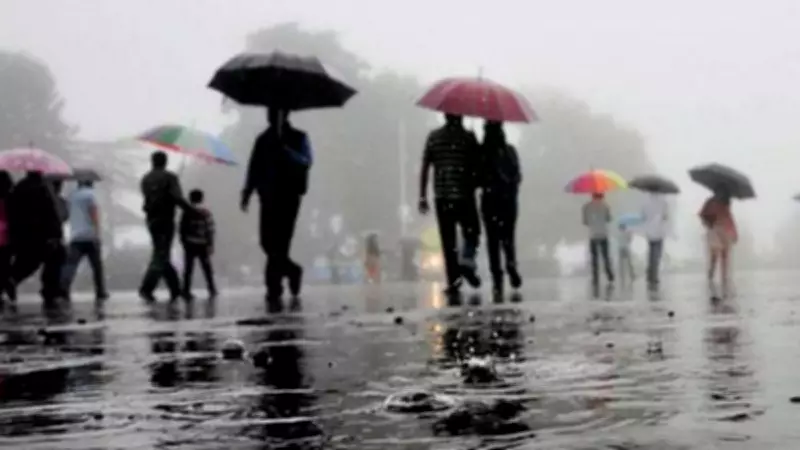
The Indian Meteorological Department (IMD) has issued a weather alert for large parts of India, forecasting winds reaching up to 70 kilometers per hour, accompanied by rain and thunderstorms. The alert covers several states and union territories, including Delhi, Uttar Pradesh, Rajasthan, Madhya Pradesh, Gujarat, Maharashtra, and parts of southern India.
Regions Under Alert
According to the IMD, the western disturbance is expected to bring significant weather changes across northern and central India. The alert specifically mentions that winds of 60-70 kmph are likely to affect areas in Rajasthan, Gujarat, and Maharashtra. Additionally, thunderstorms with lightning and gusty winds are predicted for Delhi, Uttar Pradesh, and Madhya Pradesh.
Impact on Daily Life
Residents in the affected regions are advised to take precautions as the weather could disrupt transportation, including flights and train services. The IMD has warned of possible damage to weak structures, trees, and power lines due to the high winds. Farmers are also cautioned to protect their crops from potential damage.

The weather office has urged people to stay indoors during the storm and avoid open areas, as lightning strikes pose a significant risk. Local authorities have been put on alert to handle any emergencies that may arise.
Rainfall Predictions
In addition to strong winds, the IMD has predicted moderate to heavy rainfall in several parts of the country. The western disturbance is expected to bring rain to the Himalayan region, while a cyclonic circulation over the Arabian Sea may cause precipitation along the west coast. Southern states like Kerala and Karnataka are also likely to experience isolated heavy showers.
Temperature Changes
The IMD has noted that the weather system will bring a drop in temperatures across northern India, providing relief from the ongoing heatwave conditions. However, the humidity levels may rise in coastal areas, leading to discomfort.
Authorities have advised people to stay updated with the latest weather forecasts and follow safety guidelines issued by local disaster management teams. The IMD continues to monitor the situation and will issue further updates as the weather develops.