

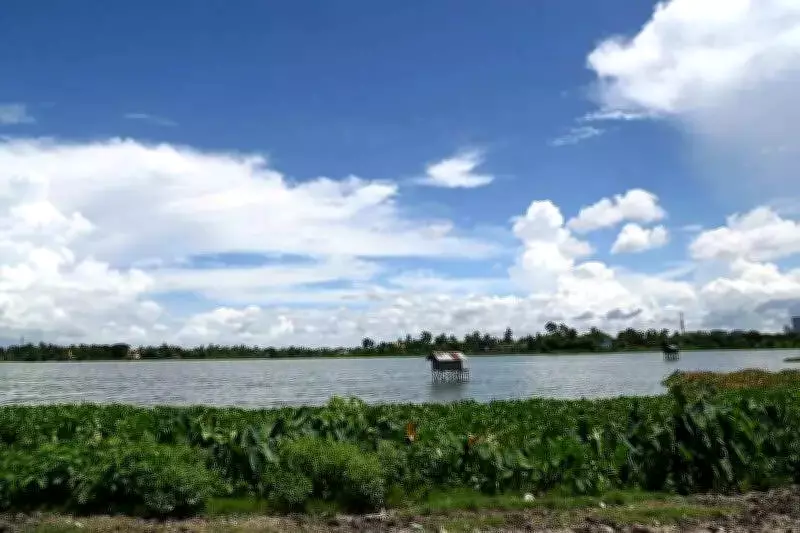
India-Germany Climate Talks in Kolkata Spotlight Economic Value of Wetlands
Experts at the India-Germany Climate Talks held in Kolkata on Thursday emphasized the urgent need to recognize and monetize the economic value of wetlands, such as the East Kolkata Wetlands (EKW). They argued that these ecosystems hold significant potential for generating carbon credits while delivering crucial ecological and livelihood benefits.
Wetlands as Nature-Based Solutions for Urban Sustainability
The discussion, titled 'Beautiful Wetlands: Partnering for Water, Partnering for Life', took place at the Goethe-Institut Kolkata and brought together stakeholders from government, industry, and civil society. Speakers highlighted that wetlands, often overlooked in urban planning, can serve as effective nature-based solutions by combining wastewater treatment, carbon sequestration, and income generation.
Opening the session, Barbara Voss, Consul General of the German Consulate General in Kolkata, stated, "Wetlands are not only rich in biodiversity but essential for climate resilience and sustainable livelihoods." She pointed to the Indo-German Green and Sustainable Development Partnership as a key platform for fostering joint climate action and collaboration.

Ecological and Economic Significance of Indian Wetlands
Speakers noted that wetlands across India support nearly 6% of the population, acting as natural carbon sinks that strengthen water and food security. They also buffer against extreme climate events like floods and storm surges. Panellists specifically described the East Kolkata Wetlands as a globally significant model of sustainable urban ecology.
As a designated Ramsar site, the EKW functions as a natural sewage treatment system, recycling Kolkata's wastewater into resources that sustain fisheries and agriculture. Nobina Gupta of Disappearing Dialogues explained that such systems could extend beyond environmental benefits to create measurable economic value through carbon markets, making conservation efforts financially viable.
Former Chief Wildlife Warden Debal Roy added, "Sundarbans are vital ecological buffers that protect coastal populations while supporting millions of livelihoods." This underscores the broader importance of wetland conservation across India.
Financing Strategies for Wetland Conservation
Speakers stressed the necessity of mobilizing large-scale financing for wetland conservation, identifying tools such as blended finance, green sukuk, water bonds, biodiversity credits, and carbon markets to attract private investment into climate-resilient ecosystems.
With developing countries requiring an estimated $2 trillion to $4 trillion annually for climate action and over $210 trillion in global private assets available, experts argued that wetlands represent a significant yet underutilized investment opportunity. Madhura Mitra, Partner in Climate and Carbon, Sustainability, and Transformation at PricewaterhouseCoopers (PwC), remarked, "This is not just a financing gap, but a market opportunity waiting to be unlocked."
Collaborative Efforts and Future Outlook
Taina Dyckhoff, a climate change expert from Germany, emphasized that sustained collaboration between nations is essential for advancing wetland conservation. Shambhavi Krishna of GIZ, who moderated the talk, described India's wetlands as "hidden infrastructure" that provide critical services like water purification, flood control, and livelihood support, often at a fraction of the cost of engineered alternatives.
The talks concluded with a call for increased awareness and action to integrate wetlands into economic frameworks, leveraging their potential for carbon credit generation and sustainable development.






