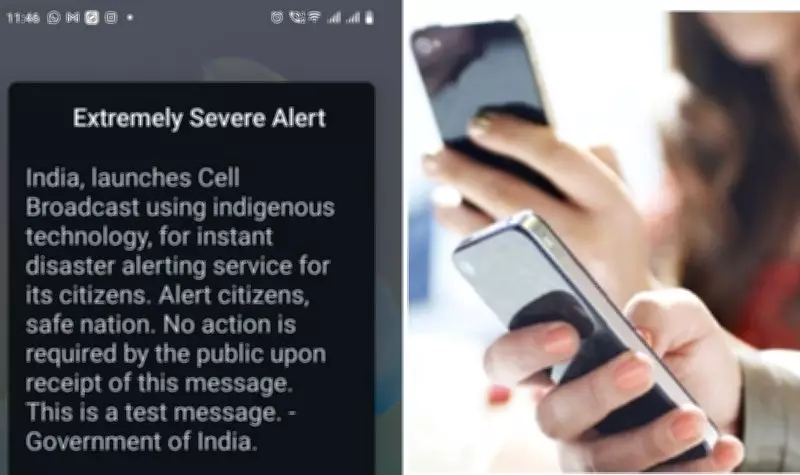
India has successfully tested a new state-of-the-art disaster alert system, sending a severe warning message to millions of citizens across the country. The test, conducted by the National Disaster Management Authority (NDMA), aimed to evaluate the effectiveness of the system in disseminating critical alerts during emergencies.
How the System Works
The new system utilizes a combination of technologies, including cell broadcast and satellite communication, to send alerts directly to mobile phones. Unlike traditional SMS-based warnings, cell broadcast allows messages to be sent to all devices within a specific geographic area without network congestion. This ensures that even in high-traffic situations, the alerts reach the intended recipients promptly.
During the test, a simulated severe weather warning was issued, triggering a loud alarm and a detailed message on millions of phones. The message included instructions on safety measures and recommended actions. The system is designed to work even when mobile networks are overloaded, making it reliable during large-scale disasters.

Importance of the Test
This test is a crucial step in India's disaster management strategy. With the country facing frequent natural calamities such as cyclones, floods, and earthquakes, an efficient alert system can save lives. The NDMA has been working on enhancing early warning capabilities, and this new system is expected to be a game-changer.
Officials stated that the test was successful, with messages delivered to a vast majority of users within seconds. The system will now be fine-tuned based on feedback and will be deployed for real-time use in the coming months.
Public Response and Feedback
Citizens reported receiving the alert clearly, with many appreciating the loud alarm that accompanied the message. Some users noted that the message was in multiple languages, ensuring accessibility. The NDMA has urged people to not ignore such alerts and to follow the instructions provided.
Future Plans
The government plans to integrate this system with other emergency services, such as disaster response teams and local authorities, to ensure a coordinated response. Additionally, the system will be used for various types of alerts, including missing child alerts and public health emergencies.
India joins a growing list of countries adopting advanced alert systems. The successful test marks a significant milestone in the nation's disaster preparedness efforts.