

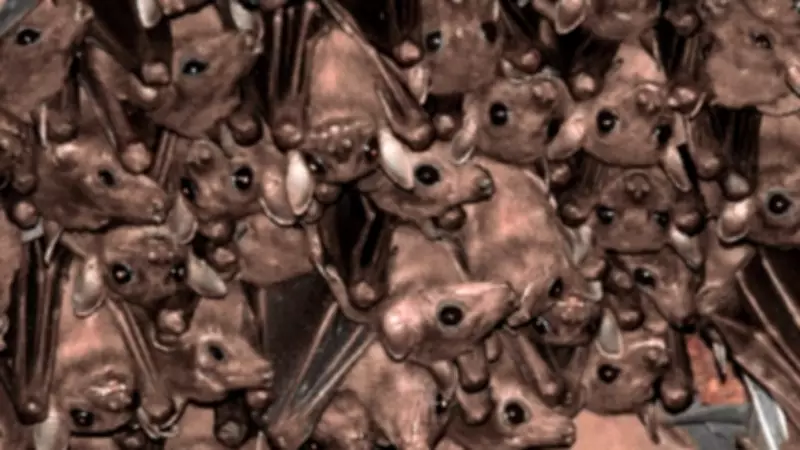
India's Bats Face Mounting Threats Despite Ecological Significance
NEW DELHI: A comprehensive national assessment, conducted after a gap of two decades, has unveiled that India's bats—crucial agents for pollination, pest control, and forest regeneration—remain profoundly understudied and are increasingly endangered by human-induced changes. The report, titled State of India's Bats (2024-2025), is a collaborative effort by the Nature Conservation Foundation, Bat Conservation International, WWF, and the Centre for Wildlife Studies, incorporating insights from over 30 researchers across 27 institutions.
Diversity and Research Gaps in Bat Populations
India hosts at least 135 species of bats, positioning them as the country's most diverse group of mammals. However, the report underscores a significant research deficit, with fewer than 50 dedicated bat researchers currently active nationwide. Among these species, 16 are endemic to India, and seven are officially classified as threatened, while data on numerous others remain incomplete. This marks an increase from the previous assessment, which recorded 120 species, highlighting both the richness and the precarious state of bat biodiversity.
Ecological Benefits and Conservation Challenges
The findings emphasize the immense ecological value of bats, which feed on fruit, nectar, pollen, insects, and small vertebrates. This diverse diet enables them to serve as seed dispersers, pollinators, and natural pest controllers, making them indispensable for agricultural productivity and forest health. Despite these benefits, scientists caution that the quantification of these roles is insufficient, hindering their integration into conservation policies and public awareness campaigns.

Primary Threats to Bat Survival
The report identifies rapid urbanization, habitat loss, and climate change as the foremost threats to bat populations. Expanding cities and infrastructure, along with alterations in land use, are destroying critical roosting sites such as caves, trees, temples, and historic buildings. Additionally, escalating human-bat conflict, often fueled by fear and misinformation—particularly in the wake of the Covid-19 pandemic—has exacerbated the situation, leading to further endangerment.
Urban Bats and Conservation Efforts in Delhi
Delhi, with 15 species, boasts the highest bat diversity among all Union territories. The report notes that urban bats, including those in cities like Delhi, frequently rely on monuments, old structures, and green spaces for shelter, rendering them vulnerable to redevelopment projects and pest-control measures. The Archaeological Survey of India (ASI), responsible for managing thousands of historical monuments, has often expressed concerns about bats at sites such as Qutab Minar, Khirki Mosque, Feroz Shah Kotla, and Agrasen ki Baoli in Delhi, highlighting the tension between heritage preservation and wildlife conservation.
Climate Change and Pollution Impacts
Climate change poses an emerging threat, with extreme weather events and shifting ecosystems potentially disrupting bat populations and their food sources. Furthermore, pollution and toxic exposure, especially within caves and aquatic environments, are poorly studied but represent potentially severe risks. Dr. Rohit Chakravarty of the Nature Conservation Foundation and Bat Conservation International highlighted specific concerns, noting that flying foxes in Delhi suffer during heatwaves and have been found to contain pollutants like mercury, copper, chromium, and manganese. He remarked, "Flying foxes have transitioned from 'least concern' to 'near threatened' status," underscoring the urgency of addressing these environmental hazards.
Role of Bats in Agriculture and Conservation Imperatives
The mouse-tailed bat, found in Delhi, inhabits monuments and provides agricultural benefits by preying on pests, illustrating the critical role of ASI-managed sites as sanctuaries for bat conservation. This connection emphasizes the need for integrated strategies that balance historical preservation with ecological stewardship to safeguard these vital species for future generations.






