

India's Strategic Battle Against Marine Pollution: A 7,500 km Coastline at Risk
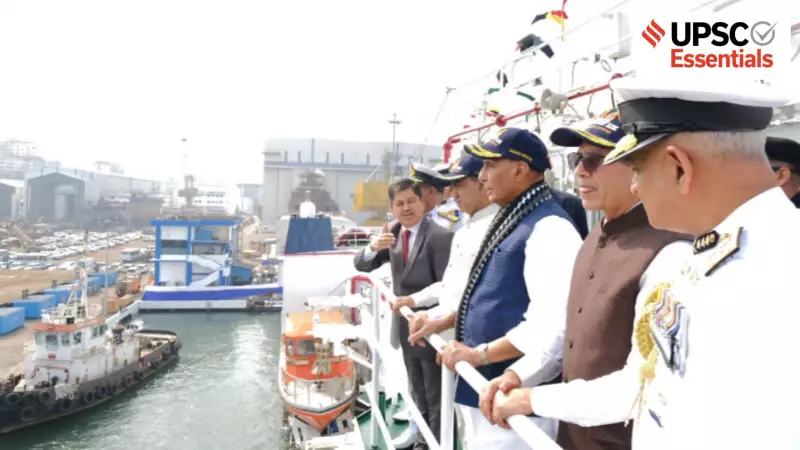
Marine pollution has emerged as one of the most pressing environmental challenges facing our planet today. For a nation like India, with an extensive coastline stretching 7,500 kilometers and approximately 200 million citizens whose sustenance and livelihoods depend directly on marine resources, this issue presents profound ecological, economic, and human security risks. The gravity of this situation was underscored by Defence Minister Rajnath Singh during the commissioning of the Indian Coast Guard Ship 'Samudra Pratap' in Goa on January 5, 2026.
The Growing Threat to India's Marine Environment
Defence Minister Rajnath Singh emphasized that marine environment protection represents not merely a strategic necessity but a moral responsibility, particularly amidst the broader challenges of climate change and global warming. The newly commissioned ICGS Samudra Pratap, specially designed for pollution control while enhancing India's environmental response capabilities, symbolizes the nation's commitment to addressing this critical issue. This advanced vessel comes equipped with sophisticated pollution detection systems, dedicated pollution response boats, and modern firefighting capabilities.
Clean oceans play an indispensable role in regulating global climate patterns, supporting marine biodiversity, and ensuring human health. Their economic significance cannot be overstated, with more than 80 percent of global trade goods transported via sea routes. The global ocean economy is valued between $3 trillion and $6 trillion, employing over 150 million people worldwide. Yet marine pollution stands as one of the most significant threats to these vital ecosystems.

Understanding Marine Pollution: Sources and Impacts
The United Nations Convention on the Law of the Sea (UNCLOS) defines marine pollution as "the introduction by man, directly or indirectly, of substances or energy into the marine environment, which results or is likely to result in such deleterious effects as harm to living resources and marine life." This definition underscores the human responsibility in creating and addressing this environmental crisis.
Marine pollution originates from both land-based and sea-based sources, creating a complex, interconnected problem. Approximately 80 percent of marine pollution stems from land-based activities, with the remaining 20 percent coming from sea-based sources. Untreated sewage and industrial wastewater carry waste and toxic substances into rivers that eventually reach coastal waters. Agricultural runoff containing nitrogen-based fertilizer residues migrates to the sea through water bodies, causing eutrophication—a dangerous concentration of nutrients that leads to harmful algal blooms and oxygen-depleted dead zones where marine life cannot survive.
Plastic waste, including microplastics, represents another major pollution source. Generated primarily on land, this waste travels from urban centers and dumping sites through river systems to the ocean. Ocean currents in certain regions concentrate this marine debris into vast floating garbage patches, with the Pacific Trash Vortex being the largest known accumulation.
Sea-based marine pollution arises from maritime activities, with discharge from shipping vessels constituting a significant source. The discharge of untreated ballast water from ships introduces invasive species and contaminants to new environments. Additionally, air and noise pollution degrade marine habitats. Oil spills resulting from shipping accidents, offshore drilling, and maritime operations release substantial quantities of hydrocarbons into marine environments, causing extensive damage to marine life. Extractive activities like seabed mining further disturb delicate underwater ecosystems.

Devastating Impacts on Ecosystems and Human Health
Marine pollution poses severe threats to both marine ecosystems and human health. One of the most concerning impacts is the loss of marine biodiversity. Plastics, oil spills, toxic chemicals, and abandoned fishing gear harm marine species through ingestion, entanglement, and exposure to toxic substances. Research indicates that approximately 100,000 marine mammals die annually due to plastic pollution, while 81 of 123 known marine mammal species have either ingested or become entangled in plastic debris.
Marine ecosystems function through delicate interdependencies that pollution disrupts. Plankton populations—microscopic plant-like organisms that form the foundation of marine food chains and play crucial roles in carbon sequestration—are particularly vulnerable. Declining plankton productivity affects not only fisheries but also global climate regulation mechanisms.
Natural coastal defenses like mangroves and seagrasses, which serve as buffers against storms and coastal erosion, suffer from oil coating and sediment contamination. Their degradation increases coastal communities' vulnerability to cyclones and sea-level rise.
The human health implications are equally alarming. Over 3 billion people worldwide rely on wild-caught and farmed seafood as a significant source of animal protein. When seafood becomes contaminated with pollutants like Methylmercury and Polychlorinated Biphenyls—persistent, toxic industrial chemicals that accumulate in fatty tissues—consumption increases risks for cardiovascular disease, dementia, and has fatal consequences for unborn children and newborns.
National and International Response Mechanisms
At the international level, various treaties and conventions have been adopted to regulate, prevent, and control marine pollution while promoting the protection and sustainable use of marine ecosystems. The most significant of these is UNCLOS, which serves as the primary legal framework for marine environment protection globally. This convention obligates states to prevent, reduce, and control pollution from land-based sources, seabed activities, and vessels.
The Convention on the Prevention of Marine Pollution by Dumping of Wastes and Other Matter (1972), commonly known as the London Convention, came into force in 1975 with the objective of promoting effective control of all marine pollution sources and preventing pollution through waste dumping at sea.
In 1973, the International Convention for the Prevention of Pollution from Ships (MARPOL Convention) was adopted, addressing pollution prevention for all substances carried by ships, including oil, chemicals, harmful substances, sewage, and garbage. To control invasive aquatic species introduced through shipping, the Ballast Water Management Convention was adopted in 2004, establishing standards and procedures for managing ships' ballast water and sediments.
India has implemented various measures to prevent and control pollution from ships. Beyond general pollution control legislation, maritime laws enable the government to take specific actions against marine pollution. The Merchant Shipping Act of 1958 contains rules regarding sea pollution prevention, while the Maritime Zones of India Act of 1976 empowers the government to implement measures for marine environment protection. In compliance with MARPOL Annex VI, the Directorate General of Shipping issued a circular in 2019 limiting sulphur content in ship fuel.
The Need for Holistic and Participatory Ocean Governance
Despite international conventions, national laws, and technological mechanisms, marine pollution remains one of the most pressing environmental challenges. For India, with its extensive coastline and millions of coastal dependents, ocean health is crucial for national security and economic stability. Since most marine pollution originates from land-based activities, effective implementation of waste management laws and proper treatment of sewage and industrial effluents becomes paramount.
As ocean pollution represents a transboundary problem, international cooperation is essential. States must focus on strengthening enforcement of frameworks like UNCLOS and MARPOL through information sharing and joint monitoring initiatives. At the global level, the proposed legally binding treaty on plastic pollution should adopt a comprehensive lifecycle approach covering plastic production, consumption, and waste management.
Defence Minister Rajnath Singh's characterization of marine environment protection as both strategic necessity and moral responsibility highlights the multifaceted approach required. Scientific monitoring, public awareness campaigns, and community participation—particularly in promoting responsible production and consumption patterns—are crucial components of any effective strategy against marine pollution.
The commissioning of ICGS Samudra Pratap represents a significant step in India's marine protection efforts, but addressing this complex challenge requires sustained commitment across governmental, industrial, and societal sectors. With climate change intensifying and coastal populations growing, India's response to marine pollution will significantly influence both regional environmental stability and global ocean health.





