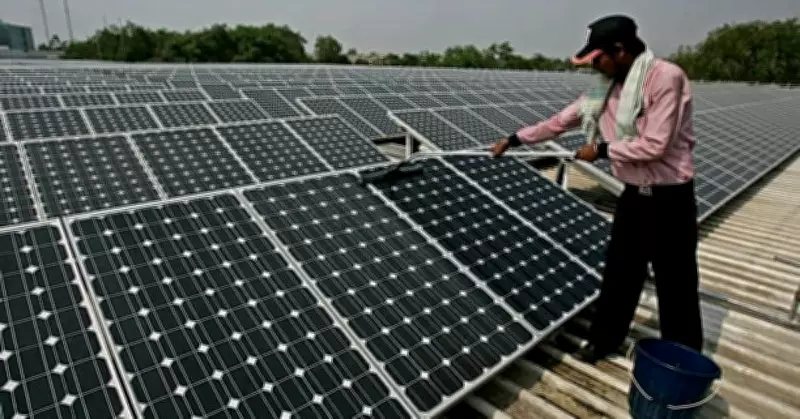
India's rooftop solar capacity is growing rapidly, but the regional divide is widening, with the northeastern region falling further behind, according to a report by Climate Compatible Futures (CCF).
Rapid Growth, Uneven Spread
The report, released on 22 June 2026, highlights that India's total rooftop solar capacity has surged by over 40% in the past year, reaching 25 GW. However, this growth is concentrated in a few states, leaving others far behind.
Gujarat, Maharashtra, and Rajasthan account for nearly 60% of the total installed capacity, while the northeastern states collectively contribute less than 1%. The report notes that the northeastern region remains the weakest link in India's rooftop solar story.

Why the Northeast Lags
Several factors contribute to the disparity. Limited grid connectivity, lower consumer awareness, and higher upfront costs are key barriers. Additionally, the region's hilly terrain and frequent cloud cover reduce solar panel efficiency, making investments less attractive.
“The northeastern states have immense potential for solar energy, but they lack the necessary infrastructure and policy support to tap into it,” said Dr. Ananya Sharma, lead author of the CCF report. “Without targeted interventions, the gap will only widen.”
Policy and Financial Hurdles
The report also points to policy inconsistencies and financial constraints. While central schemes like the PM-KUSUM program offer subsidies, their implementation in the northeast has been slow. State-level policies vary widely, with some states offering net metering and others imposing caps.
“Many consumers in the northeast are unaware of the subsidies available. Even when they are, the bureaucratic process can be daunting,” the report states.
Impact on National Targets
India aims to achieve 40 GW of rooftop solar capacity by 2030 under its renewable energy roadmap. The current trajectory suggests this target is achievable, but only if the regional imbalances are addressed. The CCF report warns that continued neglect of the northeast could derail national goals.
“The rooftop solar boom is real, but it is not inclusive. Policymakers must focus on bridging the gap to ensure equitable growth,” Sharma added.
Way Forward
The report recommends several measures: simplifying subsidy applications, increasing awareness campaigns, and improving grid infrastructure in the northeast. It also calls for state-specific solar policies that account for local challenges.
“Every region has unique characteristics. A one-size-fits-all approach won't work. We need customized solutions for the northeast,” the report concludes.