

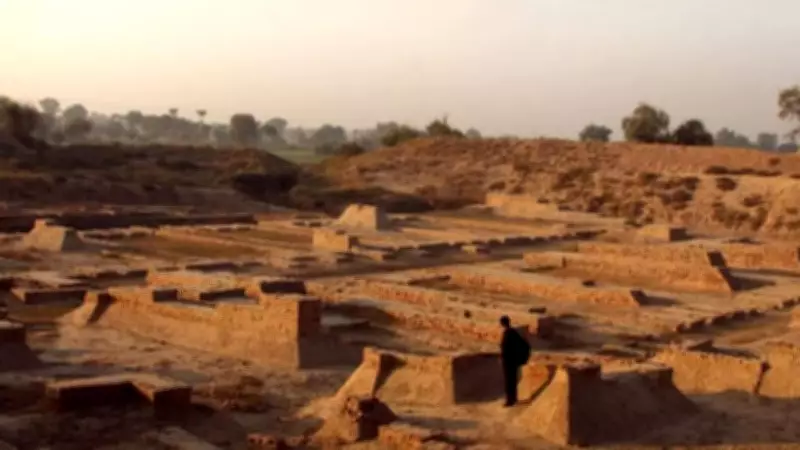
Decades of Droughts Slowly Undermined the Indus Valley Civilization
Contrary to previous assumptions of sudden disappearance, new scientific research indicates the Indus Valley Civilization experienced a gradual decline spanning many decades, primarily driven by repeated and prolonged droughts. This groundbreaking study reveals how changing rainfall patterns fundamentally reshaped one of humanity's earliest urban societies.
Advanced Urban Centers Vulnerable to Climate Shifts
The Harappan civilization, as it's also known, represented remarkable urban sophistication for its time. Cities like Mohenjo-Daro and Harappa featured meticulously planned streets, sophisticated drainage systems, and advanced water-management infrastructure. These settlements maintained extensive trade networks reaching as far as Mesopotamia and developed a unique written script that remains undeciphered today.
Despite this impressive engineering prowess, the civilization remained fundamentally dependent on the Indus River system. When hydrological patterns began shifting, the entire urban framework started showing signs of strain. Researchers now believe climate variations, particularly in rainfall distribution, gradually transformed the region into a less hospitable environment for sustaining large populations.

Computer Simulations Reveal Centuries of Declining Rainfall
Scientists employed comprehensive climate computer models spanning thousands of years to reconstruct ancient weather patterns. These simulations demonstrate a consistent decline in precipitation occurring between approximately 5,000 and 3,000 years ago. Some drought periods apparently persisted for more than 85 consecutive years, creating extraordinary challenges for agricultural production and urban water supplies.
As water scarcity intensified over generations, populations gradually migrated toward remaining reliable water sources. However, even these areas eventually proved insufficient to support the civilization's scale. Archaeological evidence indicates a particularly severe drought around 3,500 years ago coincided with widespread abandonment of major urban centers, marking what experts identify as the civilization's definitive unraveling.
Geological Evidence Confirms the Climate Narrative
To validate their computer models, researchers examined multiple geological records including stalagmites and stalactites from regional caves, whose growth patterns reflect historical rainfall levels. They also analyzed lake sediment deposits, both of which strongly corroborated the simulation data. These natural archives essentially preserved an environmental diary in stone and mud, documenting the precise climatic conditions that challenged the Harappan society.
Climate scientist Nick Scroxton emphasized this research helps clarify how shifting precipitation patterns directly influenced ancient urban settlement and agricultural practices. Geoscientist Liviu Giosan described the study as "a significant step" in understanding hydroclimate dynamics within early civilizations, highlighting the successful cross-verification between computational models and physical evidence.
The research fundamentally alters our understanding of the Indus Valley Civilization's demise, revealing it as a protracted process rather than a sudden catastrophe. This insight underscores the profound vulnerability of even the most advanced societies to environmental changes, particularly those affecting essential water resources.






