

In the great theatre of survival, some of nature's most astonishing performers are not the largest or strongest, but the most cunning. They are the masters of disguise, insects that have perfected the art of looking like something else entirely. Their incredible ability to mimic leaves, flowers, and twigs so convincingly baffles predators and delights observers, proving that in the wild, strategy often trumps strength.
The Evolutionary Art of Becoming Invisible
This phenomenon, known as mimicry, is a powerful evolutionary strategy. For many insects, the primary threat comes from predators like birds and reptiles that hunt primarily by sight. Over countless centuries, natural selection has fine-tuned their bodies to copy the precise shapes, colours, textures, and even movements of their surroundings. This creates a perfect illusion, allowing them to hide in plain sight. In some remarkable cases, this camouflage is used not just for defence but also as a lethal hunting tool, luring unsuspecting prey.
Leaf Insects: The Living Foliage
Take the Phyllium species, commonly known as leaf insects. Their disguise is so meticulous that they appear identical to real leaves. Their bodies feature detailed veins, uneven edges that look nibbled, and patches of colour that mimic both fresh greenery and fading, older leaves. The deception goes beyond appearance; when they move, they sway gently from side to side, perfectly imitating a leaf rustling in a soft breeze. This comprehensive act keeps them safe from sharp-eyed hunters.

Stick Insects & The Power of Stillness
Stick insects employ a different but equally effective tactic. With their elongated, slender bodies, they expertly mimic dry twigs or plant stems. Their key strategy is absolute stillness when threatened, often aligning their bodies alongside real branches to complete the illusion. Some species possess the added ability to gradually change their colour to match the bark or wood they are resting on, making their camouflage dynamic and adaptable to different environments.
The Orchid Mantis: A Fatal Bloom
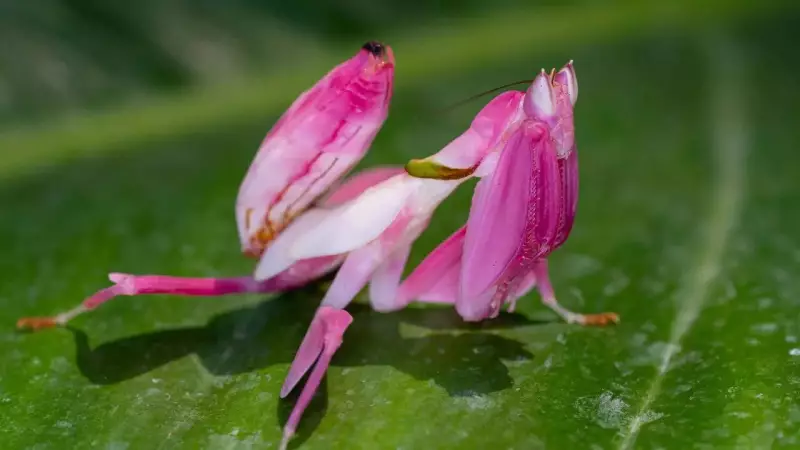
Perhaps one of the most beautiful deceptions is performed by the orchid mantis. This insect boasts a delicate, petal-shaped body with soft pastel colours of white and pink. It poses as a flower to attract pollinating insects like bees and butterflies. The mimicry is so flawless that the prey, thinking it has found a nectar source, flies directly into the mantis's waiting grasp. The illusion is so convincing that even humans often mistake it for a real blossom at first glance.
Other Masters of Disguise
The natural world is filled with other expert impersonators. The dead leaf butterfly, with its wings closed, is a perfect replica of a curled, brown, dried leaf, complete with faux veins and torn edges. Hidden among leaf litter on the forest floor, it virtually disappears. Katydids often resemble leaves that are damaged, featuring natural-looking holes, jagged outlines, and browning patches. Some even rock gently to mimic leaves moving in the wind. Similarly, various species of flower mantises blend seamlessly into blossoms, from white petals to bright pink clusters, ambushing insects that come to land.
These incredible insects are living proof of evolution's brilliance and complexity. Their existence reminds us that survival is frequently won by cleverness, adaptation, and the sheer artistry of deception. So, the next time you walk through a garden or a forest, take a closer look at the leaves and branches around you. You might just be witnessing one of nature's most clever magic tricks, hiding in plain sight.






