

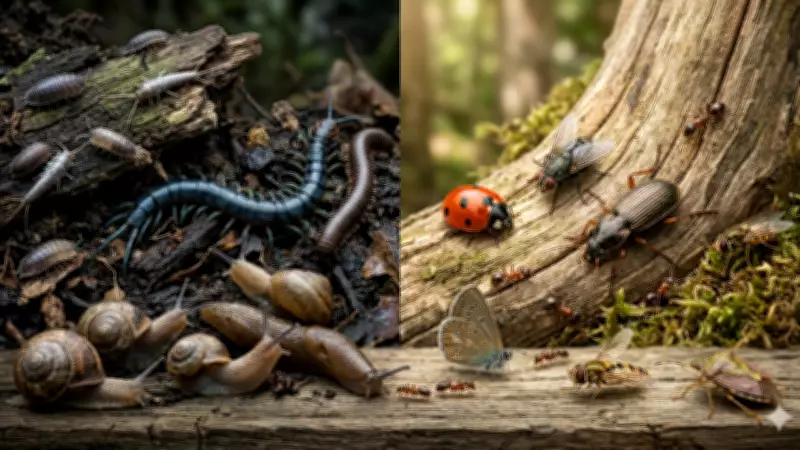
Insects vs. Creepy-Crawlies: Understanding the Scientific Distinction
In everyday conversation, many small creatures are casually referred to as "creepy-crawlies," but from a scientific perspective, not all of them qualify as true insects. Insects represent a specific biological classification within the field of Entomology, characterized by a unique set of anatomical features that distinguish them from other arthropods.
The Defining Characteristics of True Insects
Insects are scientifically defined as invertebrates possessing three primary body segments: the head, thorax, and abdomen. They consistently have six legs and typically feature one or two pairs of wings, although some species may be wingless. This structural framework sets insects apart from other commonly misidentified creatures.
Spiders, centipedes, and mites often get grouped with insects due to their crawling movements and similar habitats, but they belong to entirely different biological categories. For instance, spiders have eight legs and fall under the arachnid class, while centipedes possess numerous leg pairs and are classified as myriapods. Recognizing these distinctions is fundamental for accurate biodiversity assessment and ecological understanding.

Global Insect Diversity: Current Scientific Estimates
The world hosts an astonishing variety of insect species, far exceeding most people's expectations. According to comprehensive research published in the journal Biological Conservation, with support from organizations like the Royal Entomological Society, scientists estimate there are approximately 5.5 million insect species worldwide. Remarkably, only about one million of these have been formally described and named by entomologists.
A landmark study titled 'Worldwide decline of the entomofauna: A review of its drivers' conducted by researcher Terry Erwin in tropical forest ecosystems revealed that insect diversity is substantially higher than previously assumed. Even with modern scientific advancements, entomologists continue to update these estimates, confirming insects' dominance in terms of species diversity across all terrestrial life forms on Earth.
The Ecological Significance of Insects
Beyond their numerical abundance, insects perform indispensable roles that sustain global ecosystems and human agriculture. Organizations like the Food and Agriculture Organisation (FAO) extensively document how insects contribute to essential ecological processes.
Pollination services provided by bees, butterflies, beetles, and other insects enable the reproduction of approximately 75% of the world's flowering plants and 35% of global food crops. Without these tiny pollinators, agricultural systems would collapse, leading to severe food shortages.
Additionally, insects like ants and termites function as nature's recyclers, breaking down organic matter and returning vital nutrients to the soil. They serve as crucial food sources for numerous birds, mammals, and other organisms, forming foundational links in food webs worldwide.
Clarifying the "Creepy-Crawlies" Misconception
The informal term "creepy-crawlies" encompasses a broad range of small terrestrial creatures including insects, arachnids, worms, and other invertebrates. While all insects can be described as creepy-crawlies, the reverse isn't true—many creepy-crawlies don't meet the scientific criteria for insect classification.
This distinction isn't merely semantic but reflects fundamental biological taxonomy that goes beyond superficial appearances. Understanding these differences helps dispel common myths about various organisms and promotes greater appreciation for the organized complexity of life on our planet.
From beetles and butterflies to ants and aphids, insects constitute a remarkably diverse yet systematically defined group of organisms that have evolved over millions of years to occupy nearly every terrestrial habitat.

The Vital Role of Insects in Our World
In conclusion, insects represent not only one of Earth's most varied and fascinating life forms but also one of its most ecologically essential. Despite sometimes being overlooked or undervalued, these small creatures perform functions that make terrestrial life possible. Their decline, as noted in numerous scientific studies, would have catastrophic consequences for global ecosystems and human civilization alike.
By understanding the precise definition of insects versus other creepy-crawlies, we can better appreciate their unique characteristics, recognize their irreplaceable ecological contributions, and support conservation efforts that protect these vital components of our natural world.





