

Iran Levels Serious Allegations Against US and Israel Over Drone Warfare
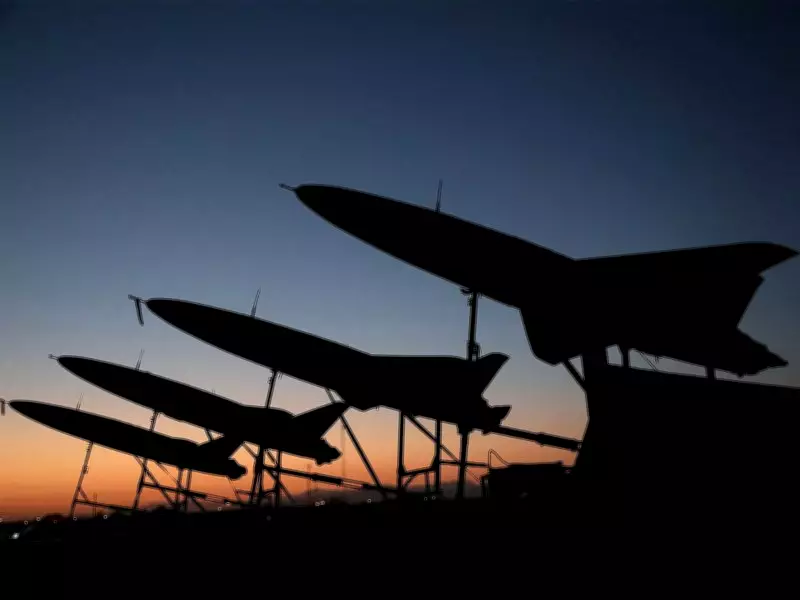
In a significant escalation of diplomatic rhetoric, Tehran has formally accused the United States and Israel of orchestrating a covert false-flag campaign using a rebranded version of Iran's own Shahed-136 kamikaze drone. The allegations were made public by the spokesman for the Khatam al-Anbiya Central Headquarters and broadcast by Iran's state-run Press TV on Sunday, March 15, 2026.
The Core Allegation: A Rebranded 'Lucas' Drone
The Iranian military spokesman asserted that the adversary nations are utilizing a drone model known as "Lucas," which is allegedly a direct copy of Iran's indigenous Shahed-136 unmanned aerial vehicle. According to the detailed statement, these drones are being deliberately deployed to strike civilian infrastructure across various nations in the Middle East region.
The primary objective, as outlined by Tehran, is to maliciously frame the Islamic Republic for these attacks, thereby damaging Iran's diplomatic relationships with neighboring countries and creating international doubt about its military intentions.

Context of Military and Political Tensions
The formal statement suggested this deceptive strategy emerged after the US and Israel faced direct military challenges and failed to establish effective political alliances against Iran. "The enemy has now turned to underhanded tricks and vicious behaviours," the spokesman was quoted as saying, indicating a shift in adversarial tactics.
Iran's military command emphasized that its own operations are conducted with extreme discipline and transparency. "As the Islamic Republic of Iran has repeatedly announced, it only targets the objectives, centers, and interests of the United States and the Zionist regime, and assumes full responsibility for any location it targets by issuing an official statement," the spokesman firmly stated, drawing a clear line between Iran's acknowledged actions and the alleged false-flag operations.
Pointing to 'Suspicious Attacks' in Neighboring Nations
The Iranian official specifically highlighted a series of recent incidents in Turkey, Kuwait, and Iraq that he characterized as "suspicious attacks." He accused Western media outlets and hostile entities of incorrectly attributing these strikes to Iranian forces without substantiated evidence.
To bolster its position, the statement referenced external confirmations that distance Iran from certain attacks:
- The United Kingdom Ministry of Defence confirmed on March 3 that a drone striking the Royal Air Force Akrotiri base in Cyprus was not launched from Iranian territory.
- Iranian Foreign Minister Abbas Araghchi had previously accused Israel of orchestrating drone strikes in Azerbaijan to sabotage Tehran's foreign relations.
- Alireza Enayati, Iran's ambassador to Saudi Arabia, has denied any Iranian involvement in an alleged strike on the US embassy in Riyadh.
The most recent incident cited was a strike on the Lanaz refinery in the Iraqi Kurdistan region on Saturday, which Iranian military sources have explicitly stated was not connected to Iran or its allied forces.
A Call for Regional Unity and Vigilance
The Press TV report concluded with a strong appeal for increased regional cooperation to counter these alleged strategies. The spokesman's statement urged: "It is essential that we trust one another and, by maintaining unity and cooperation, deter the aggressor enemy from these tricks and vicious behaviours."
He further expressed confidence that "the intelligent reactions of the authorities of the regional countries to these deceitful and vicious movements will thwart this conspiracy from the outset." This call to action underscores Tehran's desire to present itself as a transparent actor seeking collective security, in contrast to the shadowy operations it attributes to its adversaries.

These allegations emerge against a persistent backdrop of drone warfare and escalating tensions in the Middle East, where strikes on residential areas and diplomatic sites have become increasingly common. Iran has consistently maintained its innocence regarding attacks on non-military targets, and this latest statement represents a concerted effort to publicly challenge the narrative being advanced by Western nations and media.





