

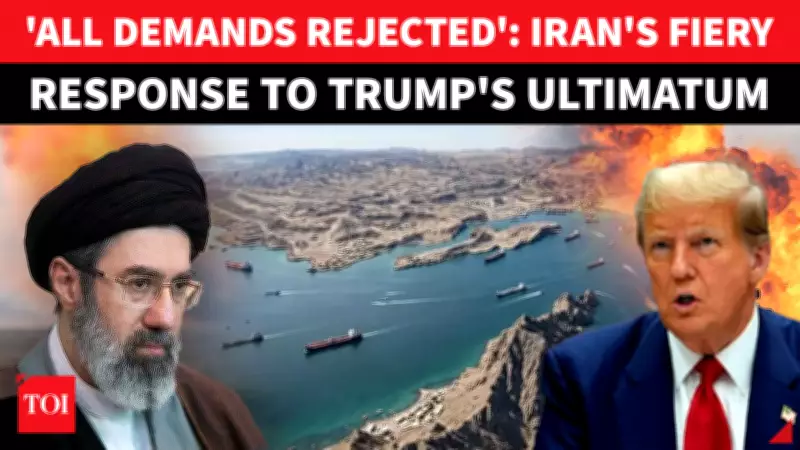
Iran Defies Trump's Ultimatum, Vows 'Forever War' Over Strait of Hormuz Closure
The geopolitical standoff between the United States and Iran has escalated dramatically, with Tehran openly defying a 48-hour deadline set by former President Donald Trump to reopen the strategic Strait of Hormuz. According to an explosive report from Axios, Iran has not only rejected proposals for a temporary ceasefire but has issued a chilling warning of a "forever war" if Washington continues its pressure tactics.
Deadline Passes Without Concession
As the clock ticked down on Trump's ultimatum, Iranian officials remained steadfast in their refusal to budge. The Strait of Hormuz, a critical maritime chokepoint through which approximately one-fifth of the world's oil passes, remains firmly closed under Iranian control. This move has sent shockwaves through global energy markets and heightened fears of a broader military confrontation in the Middle East.
Iranian authorities have laughed off the deadline, dismissing it as an empty threat from the Trump administration. Instead, they have doubled down on their demands, which reportedly include significant concessions from the United States that Washington may find politically untenable. The specifics of these demands remain undisclosed, but analysts suggest they likely involve sanctions relief and security guarantees.

Ceasefire Proposals Rejected
The Axios report reveals that behind-the-scenes diplomacy has failed to yield any breakthrough. Iran has spurned multiple ceasefire proposals from the United States, opting instead for a strategy of maximum resistance. This hardline stance reflects Tehran's calculation that it can withstand international pressure and outlast the Trump administration's bellicose rhetoric.
The rejection of ceasefire talks signals a dangerous new phase in the conflict, one where miscalculation or provocation could quickly spiral into open warfare. Regional allies on both sides are on high alert, with military assets being repositioned and diplomatic channels working overtime to prevent an accidental escalation.
Implications for Global Stability
The closure of the Strait of Hormuz has immediate and severe consequences for global energy security. Oil prices have surged in response to the crisis, threatening to derail fragile economic recoveries worldwide. Shipping companies are rerouting vessels at great cost, while insurance premiums for cargo transiting the region have skyrocketed.
Moreover, Iran's vow of a "forever war" suggests a long-term commitment to asymmetric warfare tactics, including:
- Cyber attacks on critical infrastructure
- Proxy conflicts through regional militant groups
- Maritime harassment of commercial shipping
- Ballistic missile tests and military drills
This multifaceted approach aims to impose costs on the United States and its allies without triggering a full-scale conventional war that Iran would likely lose.
Regional Reactions and Future Scenarios
Neighboring Gulf states have expressed alarm at the escalating tensions, calling for restraint and dialogue. However, with both Washington and Tehran digging in their heels, the prospects for a peaceful resolution appear dim. The situation is further complicated by domestic political dynamics in both countries, where hardliners are gaining influence.
As the standoff continues, several possible scenarios emerge:
- A negotiated settlement through third-party mediation
- A limited military strike by the United States to force open the strait
- An Iranian-backed attack on US interests elsewhere in the region
- A prolonged stalemate with periodic flare-ups of violence
Each of these carries significant risks and could fundamentally alter the balance of power in the Middle East.
The coming days will be critical in determining whether this crisis can be contained or if it will metastasize into a wider conflict with global repercussions. All eyes remain on the Strait of Hormuz, where a game of geopolitical chicken is playing out with the world's economy hanging in the balance.






