

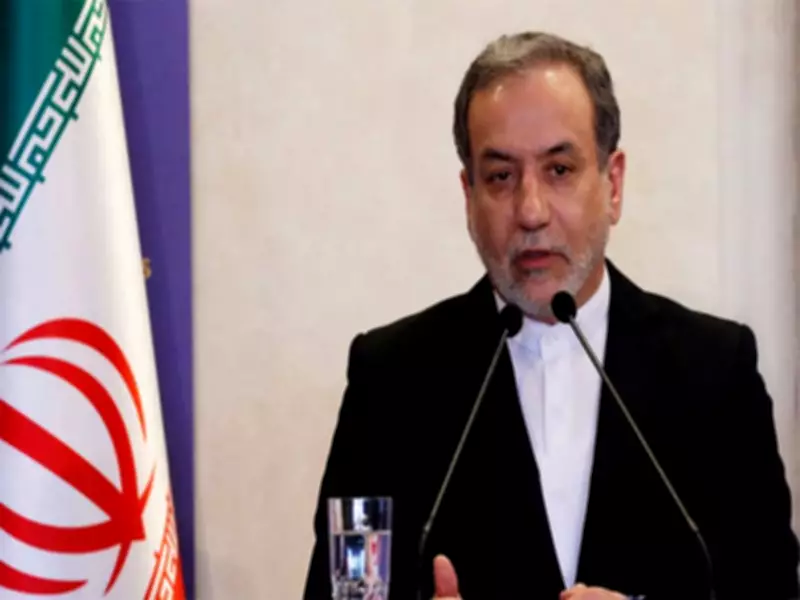
Iranian Foreign Minister Condemns Israeli Strikes as 'Ecocide' and Demands War Crimes Accountability
In a strongly worded statement, Iranian Foreign Minister Abbas Araghchi has denounced recent Israeli military strikes on fuel storage facilities in Tehran, categorizing the attacks as a severe breach of international law and labeling them as "ecocide." Araghchi emphasized that the environmental fallout from these bombings poses a significant and lasting threat to the local population, with potential health and well-being consequences that could span generations.
Environmental and Health Impacts Highlighted
Sharing his concerns via the social media platform X, Araghchi warned that residents face long-term damage to their health due to the contamination of soil and groundwater. He stated, "Residents face long-term damage to their health and well-being. Contamination of soil and groundwater could have generational impacts." This underscores the enduring nature of the environmental impact, suggesting that the consequences will be felt for decades, affecting future populations in the region.
Call for International Accountability
Araghchi demanded international accountability following the attacks on Tehran's infrastructure, asserting that "Israel must be punished for its war crimes." This call for justice comes amid escalating tensions between Iran and Israel, with Araghchi framing the strikes not only as military actions but as violations that warrant global legal scrutiny and punitive measures.

Background of Israeli Aerial Campaign
These accusations follow a massive aerial campaign by the Israeli Air Force (IAF), which confirmed on Sunday, local time, that it struck more than 200 targets across western and central Iran over the past day. The IAF stated that the strikes targeted military infrastructure, including ballistic missile systems, defence installations, and operational headquarters where soldiers of the Iranian regime operated. The Israeli military clarified that these operations were part of an ongoing campaign aimed at Iran's ballistic missile network and air defence systems across multiple locations in the country.
Advanced Military Deployments and Regional Escalation
Earlier, the IAF shared footage of Lockheed Martin F-35I "Adir" stealth fighter jets heading toward Iran for the mission, highlighting the deployment of advanced aircraft for long-range strike operations. The violence has also spread to neighbouring regions, with an Israeli air strike in southern Lebanon killing five people and wounding six others, according to Lebanon's National News Agency. The agency reported that the strike targeted the town of Qatrani in the Jezzine district, indicating that hostilities are rippling across borders and intensifying regional conflicts.
Iranian Retaliatory Strikes on US Bases
In a major escalation at dawn on Sunday, local time, Iran's Islamic Revolutionary Guard Corps (IRGC) and its naval forces carried out coordinated missile and drone strikes on four United States airbases. The IRGC stated that the strikes targeted command centres, air traffic control towers, and air defence facilities linked to "American terrorist" forces in the region. The Iranian force claimed that several assault battalions simultaneously struck these bases with precise and crushing blows. According to reports from Al Jazeera, the IRGC further asserted that satellite imagery showed extensive damage to the targeted sites, marking a significant intensification of the regional military confrontation.
This series of events highlights a rapidly deteriorating security situation in the Middle East, with both sides engaging in aggressive military actions and making serious allegations of international law violations. The environmental and humanitarian concerns raised by Araghchi add a new dimension to the conflict, emphasizing the broader impacts beyond immediate military targets.






