

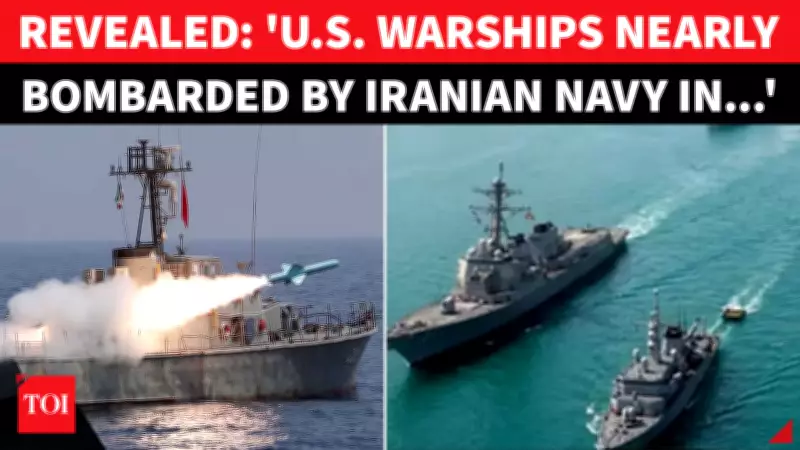
Iranian Official Reveals Missile Readiness Against U.S. Warships During Diplomatic Talks
In a startling revelation that highlights the fragile state of Middle Eastern security, Iranian Parliament Speaker Mohammad Bagher Ghalibaf has disclosed that Iranian military forces positioned missiles targeting American warships during recent diplomatic negotiations in Islamabad. The disclosure provides unprecedented insight into how close the region came to another major military confrontation.
"About To Strike": The Tense Naval Standoff
According to Ghalibaf's detailed account, Iranian forces had American naval vessels, specifically a U.S. minesweeper operating in regional waters, under direct missile targeting during the Islamabad talks. The Iranian official stated unequivocally that his country's military was prepared to respond immediately if the American vessel came any closer to Iranian territorial waters. This revelation confirms long-standing concerns about the potential for accidental escalation in the strategically vital Strait of Hormuz.
"We were ready to respond if they came closer," Ghalibaf emphasized during his remarks, underscoring the seriousness of the military posture Iran maintained throughout the diplomatic engagement. The situation represents one of the most direct confrontations between Iranian and American forces in recent years, occurring against the backdrop of ongoing regional tensions involving Israel and other Middle Eastern actors.

Direct Warning and Diplomatic De-escalation
The Iranian Parliament Speaker revealed that his government communicated a direct warning to the American delegation participating in the Islamabad talks. This warning was delivered through diplomatic channels even as Iranian missile systems remained trained on the U.S. naval assets. According to Ghalibaf's timeline, the situation only began to de-escalate when the American side requested a brief time window during the negotiations.
Following this diplomatic intervention, the targeted U.S. minesweeper reportedly withdrew from the area, effectively ending the immediate confrontation. This sequence of events demonstrates how diplomatic engagement can serve as a crucial pressure valve in high-stakes military standoffs, though it also reveals how dangerously close to conflict the two nations regularly operate.
Enhanced Military Responsiveness Claims
Beyond describing the specific incident, Ghalibaf used the opportunity to highlight what he characterized as significant improvements in Iran's military capabilities. The official claimed that Iran's current reaction time for military responses has been dramatically reduced compared to earlier conflicts and confrontations. While he didn't provide specific metrics, the implication is clear: Iran believes it can respond more quickly and effectively to perceived threats than in previous decades.
This claim of enhanced military responsiveness comes amid ongoing modernization efforts within Iran's armed forces, particularly its naval and missile capabilities. The Strait of Hormuz, through which approximately one-fifth of the world's oil passes, remains a constant flashpoint where such capabilities could be tested.
Broader Regional Context and Implications
The revelation of this near-confrontation occurs within a complex regional dynamic involving multiple state actors:
- Ongoing Iran-U.S. tensions that have persisted through multiple American administrations
- Israel's security concerns regarding Iranian military capabilities and regional influence
- Strategic importance of the Strait of Hormuz for global energy markets
- Pakistan's diplomatic role as host to talks during which this military standoff occurred
Ghalibaf's remarks serve as both a warning and a demonstration of capability. By publicly discussing an incident that could have escalated into open conflict, Iran appears to be signaling both its military readiness and its willingness to use diplomatic channels to manage crises. However, the disclosure also raises serious questions about how close the two nations regularly come to military engagement in one of the world's most strategically important waterways.

The incident underscores the continuing volatility of Middle Eastern geopolitics, where diplomatic talks and military posturing often occur simultaneously. As regional tensions show no signs of abating, such revelations about near-miss confrontations serve as sobering reminders of the high stakes involved in managing relationships between adversarial powers with significant military capabilities deployed in close proximity.





