

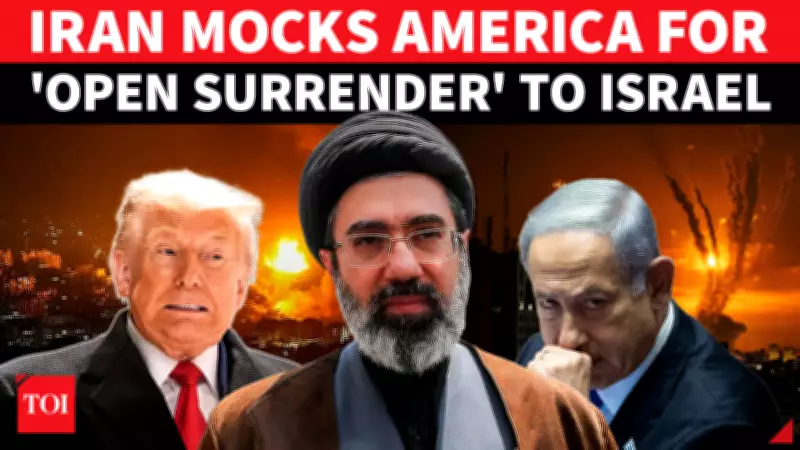
Iran Derides U.S. as Israel's 'Reporting Branch' Amid Heightened Tensions
In a sharp escalation of political rhetoric, Iran has launched a scathing critique against the United States, mocking it as a "reporting branch" for Israel. This comes after Israeli Prime Minister Benjamin Netanyahu revealed extensive coordination between Washington and Tel Aviv during ongoing negotiations, sparking accusations of structural humiliation from Tehran.
Netanyahu's Disclosure Fuels Diplomatic Firestorm
Netanyahu disclosed that senior U.S. officials, including JD Vance, have been providing regular, even daily, briefings to Israel on developments related to conflicts and nuclear talks with Iran. The Israeli leader specifically mentioned that Vance personally called him from his plane following the Islamabad negotiations, offering a detailed account of the proceedings and reiterating Washington's firm stance on Iran's nuclear programme.
This revelation has intensified long-standing tensions, with Iran interpreting the actions as a sign of subservience by the U.S. to Israeli interests. Iranian officials have publicly ridiculed the Trump administration, suggesting that such behavior undermines American sovereignty and portrays it as merely reporting to Netanyahu's government.

Broader Context of Failed Talks and Military Posturing
The mockery follows the collapse of negotiations in Islamabad, which has led to a series of provocative moves. Reports indicate that Trump is considering limited strikes on Iran, with war options back on the table after the failed talks. Concurrently, Iran has issued explosive warnings, asserting that the Strait of Hormuz is non-negotiable and threatening forceful responses as the U.S. deploys two destroyers to the region.
In related developments, Hezbollah, a pro-Iran group, has conducted missile and drone strikes on Israeli military targets, injuring two IDF soldiers and causing panic among residents. These actions underscore the volatile multi-front dynamics at play, with Iran leveraging proxy forces to exert pressure.
Political Fallout and International Reactions
The situation has drawn sharp political lines, with Trump rejecting further talks with Iran and asserting total dominance, a move that has caused oil prices to shoot up. Additionally, Trump has attacked Pope Leo over comments on the Iran war, highlighting the divisive nature of the discourse.
Amidst this, Iran's ridicule extends to Vance's diplomatic efforts, with Tehran claiming he "flew halfway across the world for nothing" after returning to the U.S. empty-handed. The accusations of excessive demands and the portrayal of U.S. officials as subservient to Israel have fueled a narrative of humiliation, complicating any path to de-escalation.
As tensions simmer, the international community watches closely, with the risk of resumed conflict looming large. The coordination between the U.S. and Israel, as highlighted by Netanyahu, continues to be a focal point of Iranian scorn, shaping the geopolitical landscape in the Middle East.






