

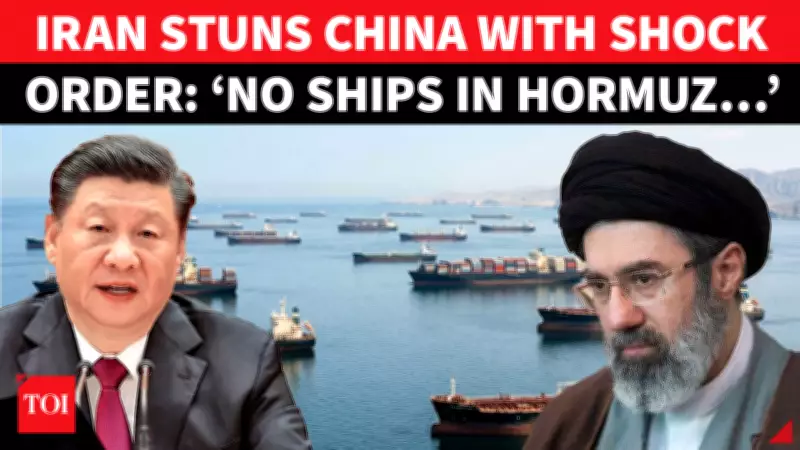
Iran Orders Chinese Ships to Return Despite 'Safe Passage' Promise
Mar 27, 2026 – In a dramatic escalation of tensions, Iran has ordered Chinese-linked vessels to turn back in the Strait of Hormuz, directly contradicting its earlier promises of "safe passage" through the critical waterway. The Islamic Revolutionary Guard Corps (IRGC) is now enforcing strict control over maritime transit, creating significant disruptions to global shipping and putting pressure on international oil markets.
Revolutionary Guard Tightens Grip on Strategic Corridor
The IRGC has established a narrow, tightly controlled corridor near Iran's coastline, permitting only pre-vetted ships to pass through. This sudden shift in policy comes after Iran had previously signaled that commercial vessels would receive protection and safe transit through the strait. The abrupt reversal has left shipping companies scrambling and raised serious questions about Iran's strategic intentions in the region.
"This represents a complete about-face from Iran's earlier assurances," noted a regional security analyst. "The Revolutionary Guard's intervention creates immediate operational challenges for any vessel attempting to navigate these waters."

Global Shipping and Oil Markets Face Immediate Pressure
The Strait of Hormuz serves as a vital conduit for approximately one-fifth of the world's oil supply, making any disruption particularly consequential for global energy markets. The forced return of Chinese-linked vessels has already triggered concerns about broader shipping security, with oil prices showing volatility in response to the developing situation.
- Approximately 21 million barrels of oil pass through the strait daily
- Shipping insurance premiums expected to rise significantly
- Alternative routes being evaluated by major shipping companies
- Global supply chains facing potential delays and increased costs
Strategic Implications for Iran-China Relations
This incident raises profound questions about the nature of Iran's relationship with China, traditionally considered a strategic partner. By targeting Chinese-linked vessels specifically, Iran appears to be sending a complex message about its willingness to assert control over regional waterways, even at the expense of diplomatic relationships.
Analysts are divided on Iran's motivations: Some view this as a tactical maneuver to demonstrate sovereignty and control, while others interpret it as a broader signal that no nation—including close partners—can assume guaranteed access to strategic waterways during periods of heightened tension.
- The incident tests the limits of Iran-China economic and strategic cooperation
- Regional powers are closely monitoring how China responds to the provocation
- The move may represent Iran's attempt to renegotiate terms of engagement with all maritime powers
- Long-term implications for freedom of navigation in international waters
Broader Regional Security Concerns
The Strait of Hormuz has long been a flashpoint in Middle Eastern geopolitics, with Iran frequently using its geographic position to exert influence. This latest development occurs against a backdrop of regional tensions, including recent missile exchanges and heightened military posturing by various actors.
The IRGC's assertive control measures suggest Iran is prepared to leverage its strategic position more aggressively, potentially creating ripple effects across global trade routes and energy security calculations. As uncertainty mounts, shipping companies and energy markets remain on high alert for further developments in this volatile corridor.






