

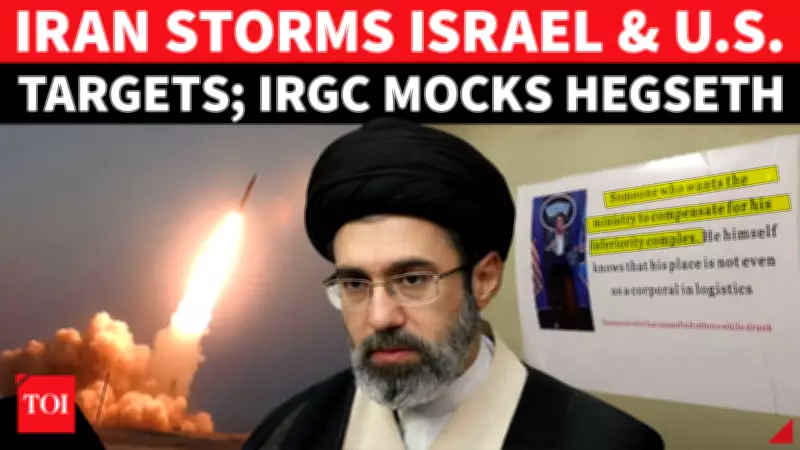
Iran Escalates Military Campaign with 84th Wave of Missile Strikes
In a significant escalation of hostilities, Iran has announced the launch of its 84th wave of coordinated missile and drone strikes, specifically targeting logistical and fuel infrastructure associated with United States military forces in the region. The Islamic Revolutionary Guard Corps (IRGC) has claimed responsibility for these operations, describing them as a successful penetration of American defensive systems.
IRGC Claims Strategic Success Amidst Rising Tensions
The IRGC's official statements emphasize that these strikes were precisely executed against key US assets, aiming to disrupt supply chains and operational capabilities. According to Iranian military sources, the attacks demonstrate Tehran's growing capability to challenge US military presence through asymmetric warfare tactics.
Sharp Rhetorical Offensive Targets US Leadership
Alongside the military escalation, Iranian state media and IRGC spokespersons have launched a pointed rhetorical campaign against US Defense Secretary Pete Hegseth. Iranian narratives have systematically challenged Hegseth's repeated assertions that American forces maintain dominance and control over the conflict dynamics.

Iranian officials have framed US statements as exaggerated propaganda, while positioning their own military operations as calculated, effective responses to American aggression. This dual approach of military action combined with psychological warfare represents a strategic shift in Iran's confrontation with the United States.
Broader Regional Implications
The 84th wave of strikes occurs against a backdrop of:
- Increasing Iranian military assertiveness in the Middle East
- Ongoing tensions between Iran and US allies in the region
- Growing concerns about potential escalation to broader conflict
- International scrutiny of Iran's military capabilities and intentions
Military analysts note that Iran's sustained campaign of missile strikes, now reaching its 84th iteration, indicates both the persistence of Tehran's strategic objectives and the limitations of current deterrence measures. The public mocking of US defense leadership adds an unprecedented psychological dimension to what has traditionally been a physical military confrontation.
As regional tensions continue to simmer, the international community watches closely how this latest escalation might influence diplomatic efforts and whether it signals a new phase in the long-standing US-Iran confrontation.






