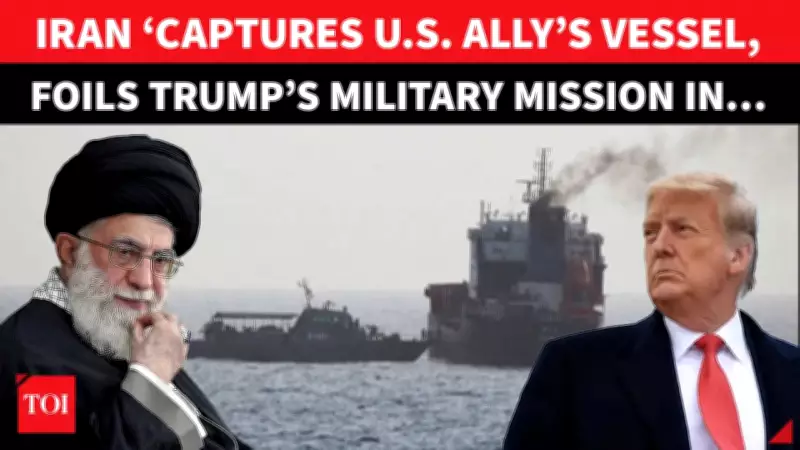
Iranian Forces Seize Bahraini Vessel Over Alleged US Spy Operation
The Persian Gulf region has been thrust into a state of heightened tension following a dramatic maritime incident. According to reports, Iran's elite Islamic Revolutionary Guard Corps (IRGC) has seized a Bahraini vessel, alleging it was involved in a spy mission orchestrated by United States forces.
Details of the High-Stakes Seizure
The incident unfolded as IRGC personnel reportedly boarded the Bahraini ship, forcing the crew at gunpoint to redirect toward Iranian territorial waters. Sources indicate that the Iranian forces commandeered the vessel's engines and conducted thorough searches of the crew's personal belongings and the ship's compartments. After this intense inspection, the vessel and its crew were eventually released, but the geopolitical ramifications are far from over.
Bahrain, a crucial American ally in the region, is monitoring the situation with significant concern. This event underscores Tehran's willingness to assert its power in the strategically vital Persian Gulf, a waterway that serves as a global oil transit route and a flashpoint for international rivalries.

Escalating Rhetoric and Regional Implications
Iran has issued stern warnings, threatening "ferocious" retaliation against any potential American military strikes. This seizure is viewed by analysts as a clear message that the Gulf is no longer merely a commercial passage but has transformed into an arena for high-stakes confrontations between regional powers and their international allies.
The timing of this incident is particularly sensitive, occurring amidst broader global tensions. It highlights the fragile security dynamics in the Middle East, where naval incidents can quickly escalate into broader conflicts. The involvement of the US, through the alleged spy mission, adds a layer of complexity, potentially drawing Washington deeper into regional disputes.
This development raises critical questions about maritime security and intelligence operations in international waters. It also reflects Iran's strategy of challenging US influence directly, even through actions against allies like Bahrain. The international community is closely watching for responses from Bahrain, the US, and other Gulf Cooperation Council members.
Broader Context of Gulf Tensions
The Persian Gulf has long been a hotspot for geopolitical maneuvering. Key factors contributing to the current volatility include:
- Ongoing disputes over nuclear programs and sanctions.
- Competing claims over maritime boundaries and resources.
- The presence of multiple foreign military forces, including the US Navy.
- Historical rivalries between Iran and Arab Gulf states.
This vessel seizure is not an isolated event but part of a pattern of assertive actions by Iran in the Gulf. It serves as a reminder of the region's potential to impact global energy markets and international security. As tensions simmer, diplomatic efforts will be crucial to prevent further escalation and maintain stability in this critical waterway.