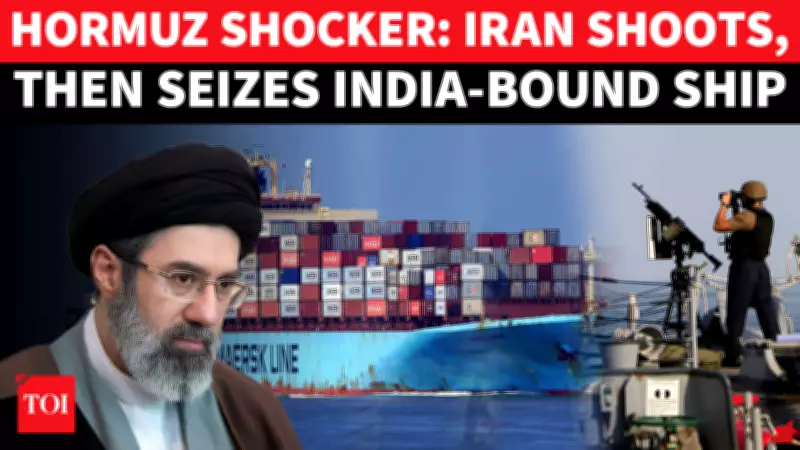
Iranian Military Captures India-Bound Cargo Vessel in Strait of Hormuz Following Warning Shots
In a dramatic escalation of regional tensions, Iranian military forces have reportedly opened fire and subsequently seized the cargo ship Epaminondas, which was en route to India, within the strategic Strait of Hormuz. This incident, occurring on April 22, 2026, has sent shockwaves through global maritime and energy sectors, highlighting the volatile security situation in one of the world's most vital oil transit corridors.
Details of the Maritime Incident and Conflicting Reports
According to initial reports, Iranian forces fired warning shots at the Epaminondas before boarding and capturing the vessel. The ship, which was carrying commercial cargo destined for India, was intercepted in the narrow Strait of Hormuz, a chokepoint through which approximately one-fifth of the world's oil passes daily. The precise circumstances leading to the seizure remain unclear, with Tehran and Western sources providing conflicting accounts.
Iranian authorities have not yet issued an official statement detailing their rationale for the action, but regional analysts suggest it may be linked to broader geopolitical tensions or alleged violations of maritime protocols. Conversely, Western intelligence sources indicate the seizure was an aggressive move that could destabilize international shipping lanes. This discrepancy in narratives has deepened uncertainty and complicated diplomatic responses.

Implications for Global Trade and Maritime Security
The Strait of Hormuz is a critical artery for global energy supplies, particularly for oil exports from the Middle East to markets in Asia, Europe, and beyond. Any disruption in this region poses significant risks to:
- Global oil prices, which are highly sensitive to supply chain interruptions.
- Maritime insurance costs, likely to surge for vessels transiting the area.
- International trade routes, as shipping companies may reroute to avoid potential hazards.
This incident follows a series of recent confrontations in the Gulf region, including attacks on oil facilities and naval skirmishes, which have already heightened security concerns. The capture of the Epaminondas underscores the escalating risks to commercial shipping and the urgent need for enhanced maritime security measures.
International Reactions and Calls for Diplomatic Restraint
In response to the seizure, global stakeholders have expressed alarm and called for immediate de-escalation. Key international bodies and nations are monitoring the situation closely, emphasizing the importance of diplomatic channels to prevent further conflict. There are growing appeals for:
- Transparent investigations into the incident to clarify the facts and hold accountable parties responsible.
- Multilateral dialogue involving regional powers and international organizations to address underlying tensions.
- Restraint from all sides to avoid actions that could trigger a broader military confrontation.
The volatile nature of the Strait of Hormuz means that any miscalculation could have far-reaching consequences, potentially impacting not only regional stability but also global economic security. As investigations continue, the international community remains on high alert, with many urging a peaceful resolution to this latest flashpoint in a historically tense maritime zone.