

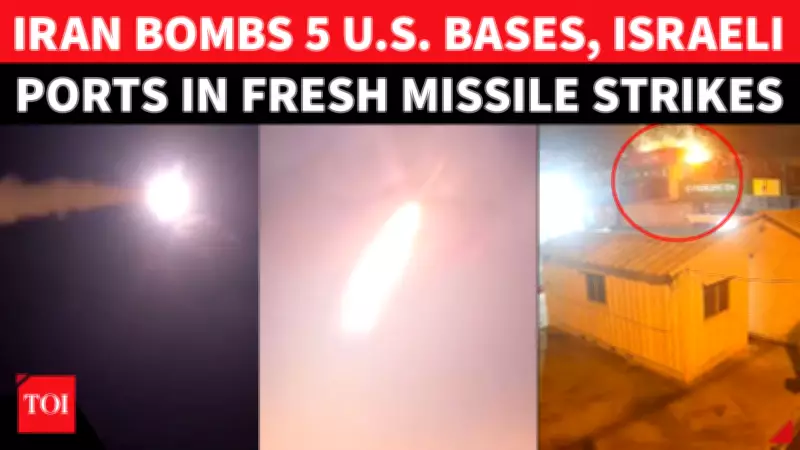
Iran Unleashes Major Eid Offensive: Over 55 US and Israeli Targets Struck
In a significant escalation of regional hostilities, Iran's Islamic Revolution Guards Corps (IRGC) has executed the 70th wave of Operation True Promise 4, targeting more than 55 sites linked to the United States and Israel across the Middle East. This aggressive military action, launched during the Eid period, represents a dangerous intensification of the ongoing conflict.
Widespread Attacks on US Bases in Five Gulf Nations
The coordinated assault involved massive missile and drone strikes that directly impacted key US military installations in five Gulf nations. According to reports, the affected countries include Saudi Arabia, the United Arab Emirates, Kuwait, Bahrain, and Iraq. These strategic bases, which play crucial roles in US operations in the region, faced substantial damage from the precision strikes.
The IRGC's offensive demonstrates a calculated expansion of their military reach, targeting American assets across multiple allied territories simultaneously. This multi-front attack has raised serious concerns about the vulnerability of US forces stationed in the Gulf and their ability to respond to such coordinated aggression.

Israeli Ports and Cities Face Direct Impacts
Simultaneously, Israeli territory came under direct fire, with major cities including Tel Aviv and Haifa experiencing significant impacts from the missile barrage. Reports indicate that port facilities in these coastal cities suffered extensive damage, with fires raging at key infrastructure points. The strikes on Israeli soil mark a bold escalation in Iran's confrontation with its regional adversary.
The targeting of civilian-adjacent port areas suggests a strategic intent to disrupt economic and logistical operations, beyond purely military objectives. This development has heightened security alerts across Israel and prompted emergency response measures in affected urban centers.
IRGC Issues Stern Warning of Stronger Retaliation Ahead
Following the extensive attacks, the IRGC has issued a clear warning indicating plans for even stronger retaliation in the near future. This statement signals their commitment to continuing and potentially expanding their offensive operations against perceived enemies in the region.
The repeated waves of strikes, which have now reached the 70th iteration of Operation True Promise 4, demonstrate a sustained campaign targeting both military installations and strategic infrastructure. This pattern of persistent aggression has created an atmosphere of heightened tension throughout the Middle East.
Growing Fears of Wider Regional Conflict
With each successive wave of attacks, fears of a broader regional war have intensified significantly. The scale and coordination of this latest offensive have particularly alarmed international observers and regional stakeholders alike.
The situation presents several critical concerns:
- The potential for direct military confrontation between Iran and US forces
- Possible Israeli retaliation against Iranian targets
- Risk of conflict spreading to involve other regional powers
- Impact on global energy markets and shipping routes
As the IRGC continues its campaign against what it describes as "enemy targets," the international community watches with growing apprehension. The combination of sophisticated missile technology, drone capabilities, and strategic targeting has created a volatile security environment that threatens to destabilize the entire region.
The Eid period attacks represent not just another chapter in the ongoing tensions, but a potentially transformative moment in Middle Eastern geopolitics. With both sides demonstrating increased willingness to engage in direct confrontation, the path toward de-escalation appears increasingly difficult to navigate.






