

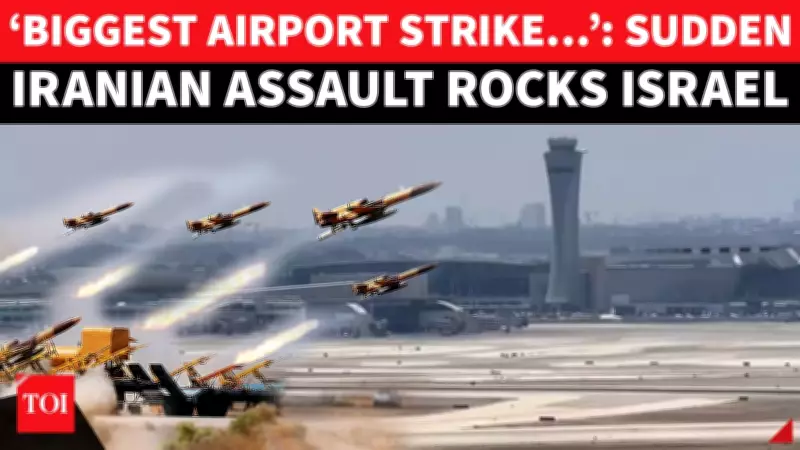
Iran Launches Retaliatory Drone Strike on Israel's Ben Gurion Airport
In a significant escalation of hostilities, Iran has reportedly carried out a retaliatory strike on Israel's Ben Gurion Airport. This action comes in direct response to the alleged attack on Iran's Natanz nuclear facility, which has been a focal point of regional tensions. The Islamic Revolutionary Guard Corps (IRGC) has claimed responsibility for the operation, stating that its drone unit specifically targeted critical infrastructure at the airport.
Targets and Impact of the Drone Assault
The IRGC's drone unit focused its attack on multiple high-value targets at Ben Gurion Airport. According to their statements, the strikes were aimed at fuel depots, Israeli Defense Forces (IDF) jets, and fuel carrier aircraft. Iranian media outlets have reported that these attacks disrupted civilian operations, with initial accounts indicating that flights were affected. While the full extent of the damage remains unconfirmed, the targeting of such infrastructure underscores the strategic nature of this retaliation.
Earlier reports from Israeli broadcaster Kann and Iranian news sources suggested that at least three aircraft were damaged or destroyed in a missile strike prior to the drone assault. This series of events highlights the rapid escalation in military actions between the two nations. The attack on Ben Gurion Airport is particularly notable as it signals a shift towards targeting critical civilian and military assets, raising concerns about broader regional stability.

Context and Escalation Following Natanz Incident
The drone strike on Ben Gurion Airport follows the alleged attack on Iran's Natanz nuclear facility, which has been a source of ongoing friction. Iran has framed this retaliation as a necessary response to what it perceives as aggression against its sovereign interests. The IRGC's involvement indicates the high level of coordination and planning behind the operation, emphasizing Iran's capability to project power beyond its borders.
This escalation comes amid a backdrop of heightened tensions in the Middle East, with both nations engaging in a tit-for-tat cycle of attacks. The targeting of an international airport like Ben Gurion not only impacts military logistics but also disrupts civilian travel and economic activities, potentially drawing international attention and condemnation. As details continue to emerge, the global community watches closely, aware that such incidents could precipitate further conflict in an already volatile region.
Key Points of the Incident:- Iran's IRGC conducted drone strikes on Ben Gurion Airport in retaliation for the Natanz attack.
- Targets included fuel depots, IDF jets, and fuel carrier aircraft.
- Civilian operations were disrupted, with reports of affected flights.
- At least three aircraft were previously damaged or destroyed in related missile strikes.
- The attack marks a sharp escalation in targeting critical infrastructure.
The situation remains fluid, with authorities on both sides assessing the damage and formulating responses. This event underscores the fragile state of relations between Iran and Israel, highlighting the potential for rapid deterioration into broader conflict. Stakeholders in the region and beyond are urged to monitor developments closely as the implications of this strike unfold.






