Iran Issues Strong Warning in Response to Trump's Hormuz Ultimatum
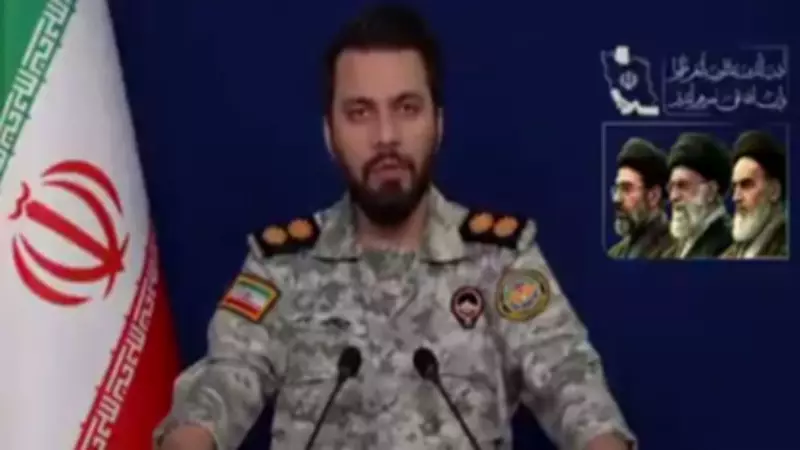
Tehran has delivered a forceful warning in reaction to US President Donald Trump's threat regarding the Strait of Hormuz, declaring that any assault on its energy infrastructure would provoke retaliation against a broader array of targets linked to the United States and its regional allies. The message was communicated by Ebrahim Zolfaghari, spokesperson for Iran’s Khatam al-Anbiya Central Headquarters, and broadcast by the state-run Islamic Republic of Iran Broadcasting (IRIB).
Iran's Retaliatory Stance on Energy Infrastructure
Zolfaghari explicitly stated that if Iran's fuel and energy sector faces an enemy attack, the response would extend to all energy infrastructure, information technology systems, and desalination facilities belonging to the United States and the regime in the region. This declaration underscores Iran's readiness to escalate the conflict beyond military targets, potentially impacting civilian and economic assets.
Trump's 48-Hour Ultimatum and Military Preparations
The warning comes in the wake of Trump's social media post, where he issued a 48-hour ultimatum for Iran to reopen the Strait of Hormuz without threat, or face US strikes on its power plants. According to sources cited by CBS News, the Pentagon has been developing detailed plans that could involve the deployment of ground troops into Iran, although no final decision has been made. Trump publicly downplayed the likelihood of such a move during an Oval Office address, stating, "No, I'm not putting troops anywhere," but added, "If I were, I certainly wouldn't tell you."

White House Press Secretary Karoline Leavitt emphasized that the Pentagon's role is to provide the President with "maximum optionality" in a crisis, clarifying that there are currently no plans to send ground forces. However, behind-the-scenes military planning appears to be advancing, with discussions on arrangements for detaining Iranian personnel and paramilitary members in the event of an invasion.
US Military Movements and Regional Tensions
Concurrently, the United States has initiated the positioning of forces closer to the region. Units from the 82nd Airborne Division are being prepared for potential deployment, alongside a Marine Expeditionary Unit and the Army’s Global Response Force. On the ground, thousands of Marines are en route to the Middle East, with three naval ships carrying approximately 2,200 personnel recently departing from California. This deployment marks the second such movement since the conflict began, while another unit redirected from the Pacific continues its journey.
These strategic steps highlight the Pentagon's efforts to maintain multiple response options as tensions escalate and Iran signals its intent to widen the scope of any retaliation. The situation remains fluid, with both sides preparing for possible confrontations that could have significant regional and global implications.