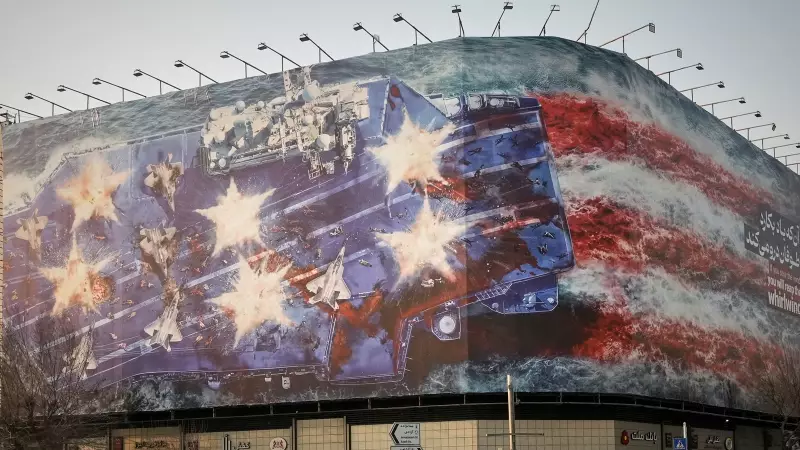
Iran Unveils Provocative Mural in Tehran as Stark Warning to United States
In a bold and symbolic move, Iran has publicly unveiled a large-scale mural in its capital city of Tehran, directly warning the United States of severe military retaliation should Washington choose to conduct any form of military strike against the Islamic Republic. This provocative artwork serves as a stark visual reminder of the escalating tensions between the two nations, which have been simmering for years over various geopolitical issues, including nuclear ambitions and regional influence.
Artistic Depiction of Missile Launch as a Clear Message
The mural, prominently displayed in a central location in Tehran, features a dramatic depiction of a missile launch, symbolizing Iran's military capabilities and readiness to respond aggressively to any perceived aggression. This artistic representation is not merely decorative; it is a calculated political statement aimed at both domestic and international audiences. By showcasing such imagery, Iranian authorities are reinforcing their narrative of strength and resilience, while simultaneously sending an unambiguous message to the US about the potential consequences of military action.
This unveiling comes at a time of heightened diplomatic strain, with recent incidents and rhetoric fueling fears of a broader conflict. The mural's timing suggests it is part of a broader strategy to project power and deterrence, leveraging public art as a tool of psychological warfare. Iranian officials have reportedly emphasized that the artwork reflects the nation's unwavering stance on defending its sovereignty, echoing previous statements from top leaders who have vowed to retaliate forcefully against any attacks.

Context of Rising Tensions and Historical Antagonisms
The relationship between Iran and the United States has been fraught with hostility for decades, marked by events such as the 1979 Iranian Revolution, the subsequent hostage crisis, and ongoing disputes over Iran's nuclear program. In recent years, tensions have flared due to incidents like the targeted killing of Iranian General Qasem Soleimani by the US in 2020, which Iran responded to with missile strikes on US bases in Iraq. The new mural can be seen as an extension of this cycle of threats and counter-threats, underscoring the volatile nature of the bilateral dynamic.
Experts note that such public displays are often used by Iran to bolster national morale and assert its position on the global stage, particularly amid economic sanctions and international isolation. The mural's unveiling may also be intended to rally domestic support, portraying the government as a defender against external enemies. Meanwhile, international observers are closely monitoring the situation, concerned that any miscalculation or escalation could lead to a dangerous military confrontation with far-reaching implications for regional stability.
Potential Implications and Global Reactions
As the mural gains attention worldwide, it raises critical questions about the future of Iran-US relations. While the United States has not issued an immediate official response to the artwork, analysts suggest that it could further complicate diplomatic efforts, potentially derailing any fragile negotiations aimed at de-escalation. The warning embedded in the mural aligns with Iran's longstanding policy of asymmetric warfare, where it leverages its missile arsenal and proxy networks to counter superior US military might.
In the broader context, this development highlights the ongoing power struggles in the Middle East, where Iran seeks to expand its influence while the US and its allies work to contain it. The mural serves as a vivid reminder that art and politics are deeply intertwined in Iran, with public spaces often used to convey ideological messages. As tensions persist, the world watches anxiously, hoping that such symbolic gestures do not translate into actual conflict, but rather remain as warnings in the realm of rhetoric and display.