Residents of Mysuru have sought permission to cut down over 11,000 trees on private land over the past four years, according to data from the city's forest department. The applications come as the city recorded its highest maximum temperature of 37.2 degrees Celsius on April 24, and 36 degrees Celsius on March 27, officials from the Indian Meteorological Centre, Bengaluru, reported.
Rise in Tree-Felling Requests
The trend emerged between 2022 and 2026, with a steady increase in requests. Most applications cite reasons such as construction, safety hazards from old or diseased trees, and clearing land for agriculture. However, environmentalists warn that removing such a large number of trees could worsen local microclimates and air quality.
According to the Mysuru Urban Development Authority, the city's green cover has already declined by 12% in the last decade due to rapid urbanization. The current request to fell 11,000 trees could further reduce the canopy, impacting biodiversity and heat regulation.

Temperature Records and Climate Concerns
The Indian Meteorological Department noted that Mysuru's temperatures in March and April 2026 were 2-3 degrees above the historical average for those months. Officials attribute the spike to a combination of global warming and local factors like reduced green cover. "Mysuru is experiencing higher temperatures than usual, and the loss of trees could accelerate this trend," said a senior IMD scientist, speaking on condition of anonymity.
The highest temperature of 37.2°C on April 24 surpassed the previous record of 36.8°C set in 2019. Similarly, the March reading of 36°C was the highest for that month in over a decade.
Impact on Environment and Health
Urban heat island effects are likely to intensify if the tree felling proceeds. Trees provide shade and release moisture through transpiration, cooling the surrounding area. A study by the Indian Institute of Science, Bangalore, estimates that losing 10,000 trees could raise local temperatures by an additional 0.5°C-1°C during summer.
Health experts also express concern. Increased heat and reduced air filtration can lead to higher cases of respiratory illness and heat-related conditions. "We are already seeing more patients with heat exhaustion this year," said Dr. Ravi Kumar of Mysuru Medical College. "The loss of trees will only make it worse."
Regulatory Process and Public Response
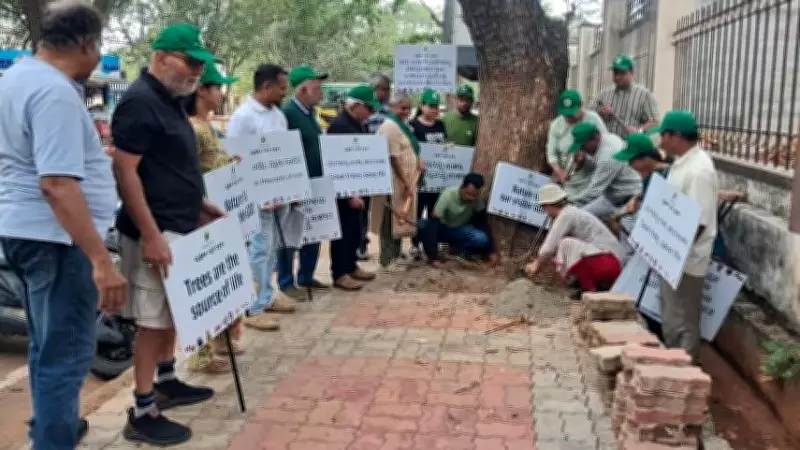
Each felling application must be approved by the Karnataka Forest Department, which assesses the necessity and may require compensatory planting. However, activists argue that compliance is often poor. "Of the 11,000 trees applied for, only about 30% were approved with conditions for replanting, and enforcement is weak," said Priya Shenoy, a member of Mysuru Green Collective.
The department has proposed a new policy requiring applicants to plant five saplings for every tree cut, but environmentalists say this is insufficient to offset the loss of mature trees that provide immediate ecological benefits.
Way Forward
City planners are now exploring alternatives such as building around existing trees and using vertical gardens. The Mysuru City Corporation has also launched a tree census to map all trees on public and private land.
As temperatures continue to rise, the balance between development and conservation remains critical. The outcome of the pending applications could set a precedent for urban tree management in other Indian cities facing similar challenges.