The 1999 Kargil War, commemorated annually as Kargil Vijay Diwas on July 26, marked a pivotal shift in India's military approach. The 74-day conflict, triggered by the infiltration of Pakistani soldiers and militants across the Line of Control, forced the Indian Army to launch Operation Vijay and the Indian Air Force to conduct Operation Safed Sagar. The intrusion threatened India's only road link to Ladakh, the National Highway 1, and exposed critical gaps in intelligence and border surveillance.
The Kargil Intrusion and Operation Vijay
In early May 1999, Indian patrols discovered that Pakistani forces had occupied strategic heights in the Kargil sector of Jammu and Kashmir. The infiltration aimed to cut off Leh from Srinagar and force India to negotiate on Kashmir. India responded by mobilizing nearly 200,000 troops and launching Operation Vijay in May. The Indian Air Force executed Operation Safed Sagar, using sorties to dislodge intruders from high-altitude posts. The war ended on July 26, 1999, with India regaining all occupied territory.
Intelligence Gaps and Reforms
The Kargil War highlighted severe intelligence failures. Despite warnings from local shepherds and routine patrols, the scale of infiltration was underestimated. The lack of satellite imagery and signals intelligence at high altitudes hampered early detection. Post-war, India established the Defence Intelligence Agency (DIA) in 2002 to coordinate intelligence from all three services. The government also created the National Technical Research Organisation (NTRO) for technical intelligence and improved human intelligence networks in border regions.

Military Doctrine: From Defensive to Offensive
Kargil forced a doctrinal shift from a purely defensive posture to a proactive, offensive strategy. The Indian Army revised its 'Cold Start' doctrine to enable rapid mobilization and limited strikes under the nuclear threshold. Emphasis increased on mountain warfare training, with new schools established in Ladakh and Sikkim. The conflict also underscored the need for integrated air-ground operations, leading to improved joint exercises between the Army and Air Force. The casualties—527 Indian soldiers killed and over 1,300 wounded—prompted better equipment for high-altitude combat, including lightweight artillery and all-weather aircraft.
Border Infrastructure and Strategy
Post-Kargil, India accelerated border road construction under the Border Roads Organisation (BRO) to ensure rapid troop movement. The government built the Darbuk–Shyok–Daulat Beg Oldie (DS-DBO) road to strengthen connectivity in eastern Ladakh. Fencing and surveillance along the Line of Control were upgraded with night-vision cameras and motion sensors. The paramilitary and police forces also received enhanced training to counter infiltration. These measures aimed to prevent any repeat of surprise intrusions.
Legacy of Kargil Vijay Diwas
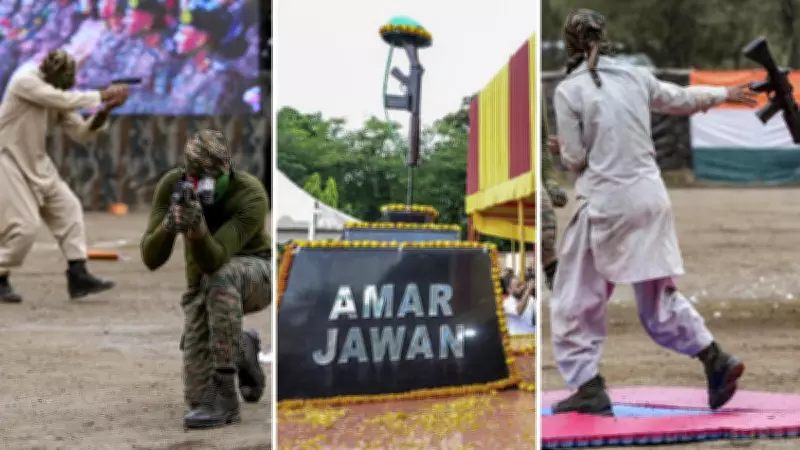
Today, 27 years later, Kargil Vijay Diwas remains a day of national pride and remembrance. The war reshaped India's military, intelligence, and infrastructure strategies, making the armed forces more agile and responsive. Annual commemorations honor the bravery of soldiers like Captain Vikram Batra and Grenadier Yogendra Singh Yadav, whose sacrifices inspired a generation. The lessons from Kargil continue to inform India's defense planning, ensuring that the nation remains prepared to safeguard its sovereignty.