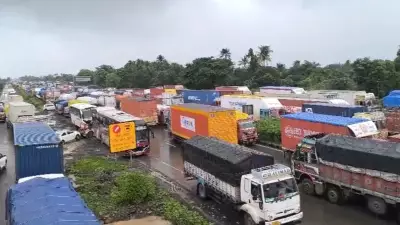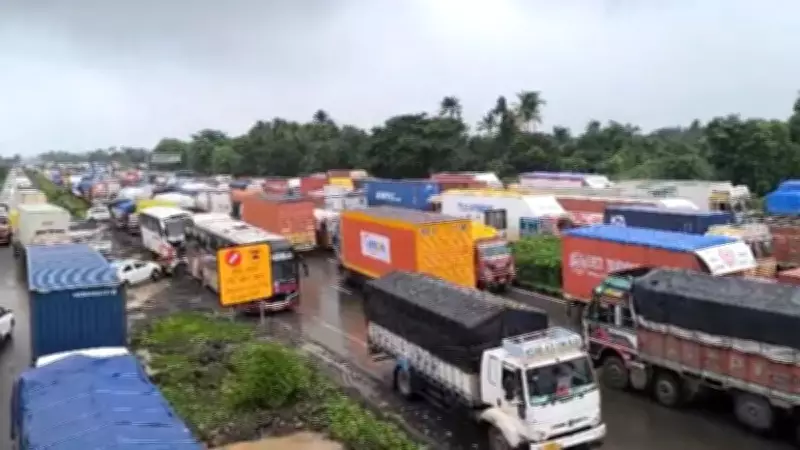
The Mumbai-Gujarat highway witnessed a massive 40-kilometer-long traffic jam on Sunday as relentless torrential rain lashed the region, causing severe damage to roads and disrupting rail services. Commuters faced hours of delays, with many stranded in their vehicles since early morning.
Torrential Rain Triggers Chaos
The downpour, which started late Saturday night, led to waterlogging on several stretches of the highway. Officials reported that the traffic jam stretched from Vasai on the outskirts of Mumbai to the Gujarat border. Vehicles moved at a snail's pace, with many stuck for over six hours. The heavy rain also caused multiple minor accidents, though no major injuries were reported. Authorities deployed cranes to clear stalled vehicles and manage the situation.
According to the India Meteorological Department, the region received 150 mm of rainfall in the last 24 hours, significantly above the average. The relentless rain has overwhelmed drainage systems, leaving roads submerged in several areas. The highway, a vital artery connecting Mumbai and Gujarat, saw a significant drop in speed as drivers navigated through flooded sections.

Rail Services Affected
The torrential rain also crippled rail services in the region. Several suburban and long-distance trains were delayed or canceled due to waterlogging on tracks. The Western Railway reported that services between Virar and Dahanu were suspended for several hours as a precautionary measure. Passengers were advised to check train schedules before traveling. The disruption added to the misery of commuters, many of whom rely on trains as an alternative to road travel.
At least two trains were stranded near Palghar due to flooding, but passengers were evacuated safely. Railway officials said they are monitoring the situation and will restore services once conditions improve. The heavy rain has also affected signaling systems, leading to further delays.
Authorities Respond
The Maharashtra State Road Development Corporation (MSRDC) has deployed teams to clear waterlogging and repair damaged roads. Diversions were set up to ease congestion, with vehicles being routed through alternative highways. The traffic police urged commuters to avoid non-essential travel and to use public transport where possible. Meanwhile, the National Disaster Response Force (NDRF) has been put on standby in case of emergencies.
The Gujarat government also issued an alert for coastal areas, warning of further rain and potential flooding. Relief teams have been positioned along the highway to assist stranded motorists with food and water. The situation is expected to improve gradually as the rain intensity decreases, but authorities cautioned that roads may remain slippery and waterlogged for the next 24 hours.
Impact on Commuters and Emergency Services
The traffic jam left thousands of commuters stranded for hours. Many reported running out of fuel and food. Local volunteers and NGOs distributed water and snacks along the highway. Emergency services, including ambulances, struggled to reach patients due to the gridlock. The police set up a special helpline to assist those in distress. "We are doing our best to clear the jam, but the rain is making it difficult," said a traffic police inspector on duty.
The 40-kilometer traffic jam highlights the vulnerability of infrastructure in the face of extreme weather events. Climate experts have called for better drainage systems and road maintenance to mitigate future disruptions. For now, commuters are advised to check traffic updates and plan their journeys accordingly.