

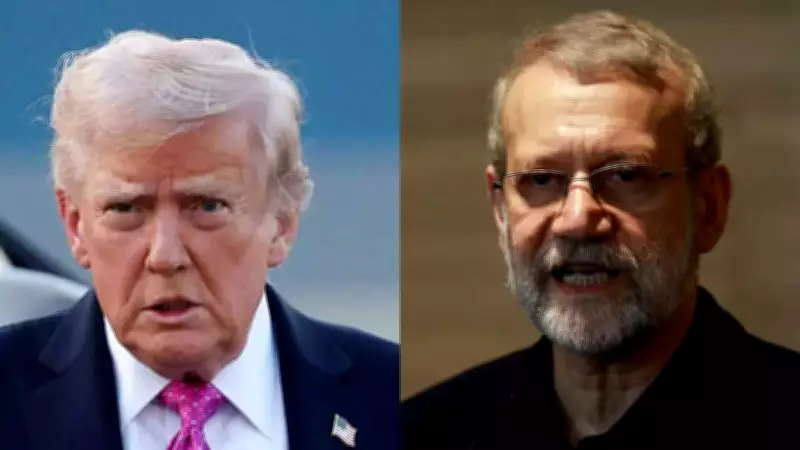
Iran Issues Stark Warning of Retaliation Against Trump Over Khamenei Assassination
Iran's senior security official Ali Larijani has issued a forceful declaration that Tehran will relentlessly pursue retaliation against US President Donald Trump for the killing of Supreme Leader Ayatollah Ali Khamenei. This warning comes as regional tensions continue to escalate dramatically following coordinated military strikes by the United States and Israel against Iranian targets.
"We Will Not Leave Him Alone"
Speaking directly to Iranian state television on Saturday, Larijani delivered a chilling message regarding the American president's responsibility for the attack that claimed the life of Iran's top leader and resulted in significant casualties. "We will not leave him alone. He must pay the price for what he did. He killed our leader and martyred more than 1,000 of our people. This is not a simple matter," Larijani stated emphatically during the broadcast interview.
The security official reinforced this warning through a post on the social media platform X, writing: "We won't leave him alone until reciprocating what he did." These remarks follow the devastating joint US-Israel military operation conducted on February 28, which resulted in the death of the 86-year-old Khamenei and triggered widespread conflict across multiple Middle Eastern nations.

Regional Threats and Military Developments
In another X post, Larijani emphasized Tehran's unwavering commitment to vengeance: "We will relentlessly avenge the blood of our leader and our people. Trump must pay and will pay." Since the initial strikes, Iran has launched retaliatory missile attacks targeting Israeli territory and American military installations throughout the Gulf region, significantly expanding the conflict's geographical scope.
Larijani issued additional warnings to neighboring countries, stating that Iran would respond forcefully if their territories were utilized by United States forces for military operations against the Islamic Republic. During his televised appearance, he declared: "Countries in the region must either stop the United States from using their territory against Iran themselves, or we will do it."
The security official specifically mentioned that two regional nations have pledged to prevent American attacks from their soil, though he expressed skepticism about these assurances. "We will wait and see. If they prevent it, we will have no issue with them," Larijani noted, while clarifying that Iran maintains no disputes with Azerbaijan but would respond to any hostile activities originating from its territory.
Trump's Dismissive Response and Continued Threats
US President Donald Trump responded to Larijani's warnings with characteristic dismissal during an interview with CBS News. "I have no idea what he's talking about, who he is. I couldn't care less," Trump stated, adding that Larijani has "already been defeated." The American president further asserted that US military strikes against Iran would continue unabated and demanded Tehran's "unconditional surrender" to resolve the escalating crisis.
Trump and Israeli Prime Minister Benjamin Netanyahu have consistently defended their preemptive strikes against Iran, claiming the Islamic Republic posed an imminent threat to regional security. "If we didn't do it first, they would have done it to Israel and give us a shot, if that was possible," Trump explained regarding the decision to launch the coordinated attack.
Broader Strategic Accusations and Regional Fallout
Larijani, who previously served as a commander within the Islamic Revolutionary Guard Corps, made several significant allegations during his extensive interview. He claimed Iranian forces have captured American military personnel during ongoing hostilities and accused both the United States and Israel of attempting to fundamentally destabilize and dismantle the Islamic Republic through their actions.
"Their issue was... the fundamental disintegration of Iran," Larijani asserted, suggesting Washington had fundamentally miscalculated the regional dynamics. He drew parallels to American interventions in Venezuela, stating: "Trump got a taste of what happened in Venezuela and liked it, thinking he could quickly do the same in Iran. Now he's stuck."

The security official elaborated on this strategic misjudgment: "I think the most important problem the Americans have is that they do not understand the context of West Asia, especially Iran. Their perception was that it would be like Venezuela. They would strike, take control and it would be over but now they are trapped."
Mounting Casualties and Expanding Conflict
The Middle Eastern conflict has intensified substantially since the initial US-Israel strikes eliminated Khamenei and several senior Iranian officials. According to emerging reports, the violence has resulted in more than 1,000 fatalities within Iran, over a dozen deaths in Israel, and at least six American military casualties since hostilities commenced.
Iran's retaliatory missile strikes against Israeli territory and US bases throughout the Gulf region represent a significant escalation that threatens to draw additional regional actors into the expanding conflict. The situation remains highly volatile as diplomatic channels appear largely inactive and military posturing continues on multiple fronts.





