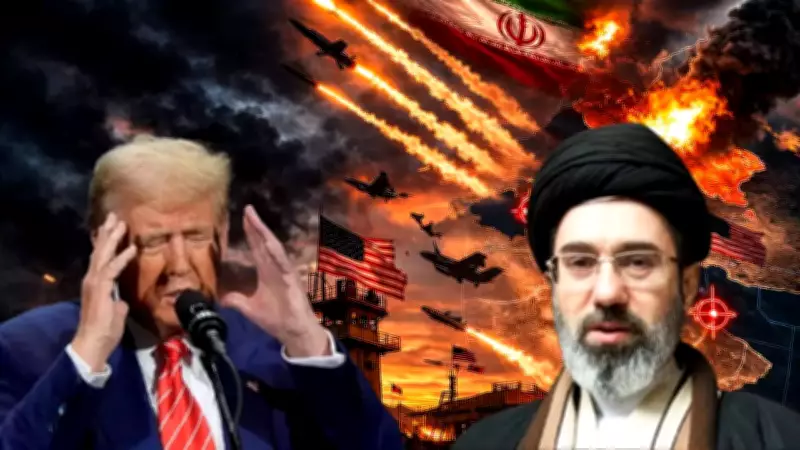
Operation Epic Fury Enters New Phase as Iran Installs New Supreme Leader
The conflict between the United States and Iran has escalated dramatically, with Operation Epic Fury now resembling the opening stages of a prolonged and high-risk regional war rather than a limited punitive strike. This shift comes as Iran transitions leadership following the killing of Ayatollah Ali Khamenei, oil prices skyrocket above $100 a barrel, and military actions expand across the Middle East.
Leadership Transition in Tehran: Mojtaba Khamenei Takes Charge
Iran has swiftly installed Mojtaba Khamenei as the new supreme leader, a move that underscores Tehran's commitment to continuity and resistance. Mojtaba, the son of the slain leader, has long been a shadowy but influential figure in Iranian politics, closely tied to conservative factions and the Revolutionary Guard. Despite holding no major public office, he was sanctioned by the United States in 2019 for his alleged role in advancing Iran's regional ambitions and domestic repression.
His background includes significant wealth accumulation, with reports estimating over $100 million from oil sales routed into international assets through shell companies. This succession signals that Iran is opting for hardline persistence over compromise, directly challenging US President Donald Trump's demands for approval of its leadership.

Military and Economic Dimensions of the Conflict
The war, now in its second week, has broadened beyond initial strikes on nuclear and military sites. Key developments include:
- Military Escalation: Israel has expanded its target set, striking oil depots in Tehran and engaging Iran-backed groups in Lebanon, where over 500,000 people have been displaced. Iran has retaliated with missile and drone attacks on facilities in Bahrain, Kuwait, and the US Embassy in Iraq.
- Economic Impact: Brent crude oil has surged approximately 25%, crossing the psychological barrier of $100 a barrel for the first time since 2022. This spike is driven by disruptions in the Strait of Hormuz, a critical chokepoint for global oil supply, and attacks on energy infrastructure.
- Humanitarian Toll: Civilian casualties are mounting, with Iran reporting over 1,200 deaths and residents in affected areas facing severe air pollution and displacement.
Global Repercussions and Market Panic
The conflict's economic fallout is spreading globally, with oil price increases triggering higher costs for gasoline, diesel, and agricultural commodities. Analysts warn that the situation is deteriorating, with no clear offramp in sight. This regional war is mutating into a global inflation problem, as markets signal fears of prolonged disruption.
Political tensions are also intensifying. Trump has dismissed the oil spike as a "very small price to pay" for neutralizing Iran's nuclear threat, but internal debates in Washington reveal concerns about mission creep and the potential deployment of US ground forces.
Key Pressure Points to Monitor
- Iran's Leadership Stability: The ability of Mojtaba Khamenei to maintain unity within the Revolutionary Guard and continue missile launches will test Iran's resilience.
- Israel's Next Moves: Prime Minister Benjamin Netanyahu's promise of "many surprises" suggests further symbolic and strategic strikes.
- US Strategic Shift: Discussions about ground forces indicate a potential expansion beyond airpower, raising stakes for a longer conflict.
- Oil Market Dynamics: Sustained high oil prices and impaired traffic through Hormuz will reflect investor belief in the war's escalation.
The bottom line is clear: with leadership continuity in Tehran, oil above $100, and escalating military actions, Operation Epic Fury is evolving into a protracted conflict with no end in sight, challenging global stability and economic security.