

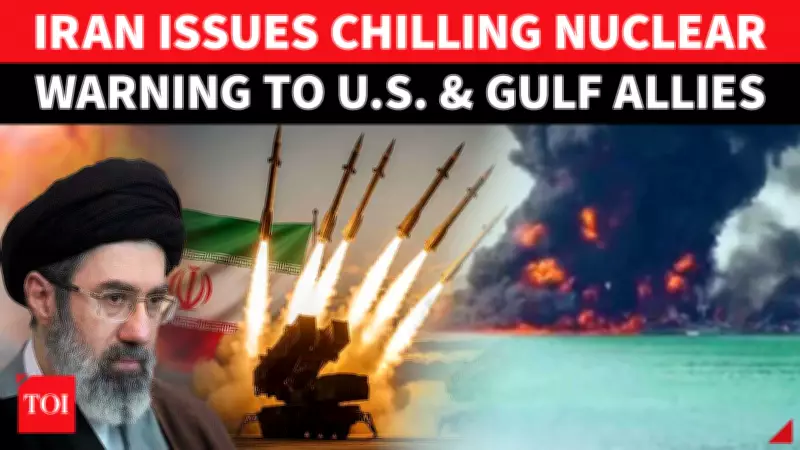
Iran Issues Dire Nuclear Warning to US Over Bushehr Facility Attack
In a dramatic escalation of tensions, Iran has issued a stark nuclear warning to the United States and Israel, following explosions near the sensitive Bushehr Nuclear Power Plant. The incident has reignited fears of a catastrophic conflict in West Asia, with Iranian officials predicting apocalyptic consequences for the region.
Foreign Minister Draws Chilling Parallel to Ukraine Crisis
Iran's Foreign Minister Seyed Abbas Araghchi delivered the grave warning, explicitly comparing the attack near Bushehr to global concerns surrounding the Zaporizhzhia Nuclear Power Plant in Ukraine. "This is not merely a military strike; it is an assault on nuclear safety that threatens millions of lives," Araghchi stated, emphasizing the potential for widespread radioactive contamination.
The minister's remarks came during an emergency briefing where he detailed the severity of the situation. "The radioactive fallout from such an incident would not respect borders," he warned. "It would spread across the Gulf region, potentially ending life in neighboring capitals and creating an environmental disaster of unprecedented scale."

Bushehr Attack Raises Nuclear Flashpoint Concerns
The explosions near the Bushehr facility have struck at what experts describe as a nuclear flashpoint in the ongoing conflict between Iran, the US, and Israel. The Bushehr plant, one of Iran's most critical atomic installations, has long been a focal point of international scrutiny and regional anxiety.
Security analysts note that any damage to the plant's containment structures could release radioactive materials into the atmosphere. The Gulf region's meteorological patterns could then carry this fallout across multiple nations, affecting major population centers including capital cities.
This warning comes amid heightened military activity in the region, with recent reports of aerial engagements and strategic strikes. The Iranian foreign minister's statement represents the most explicit nuclear threat issued in the current conflict cycle, raising the stakes significantly for all parties involved.
Regional Implications and International Response
The potential consequences outlined by Iran would extend far beyond immediate military objectives. Gulf nations, many of which host significant US military presence and critical global energy infrastructure, now face the prospect of radioactive contamination that could:
- Render urban areas uninhabitable for decades
- Contaminate vital water sources and agricultural land
- Create a humanitarian crisis affecting millions of residents
- Disrupt global energy markets and shipping routes
International nuclear safety organizations have yet to comment on the specific risks at Bushehr, but the comparison to Zaporizhzhia—where fighting near a nuclear facility raised global alarm—suggests similar concerns about reactor integrity and spent fuel storage.
The US and Israeli governments have not immediately responded to Iran's latest warning, though previous statements have emphasized their right to defend against what they describe as Iranian aggression. This nuclear dimension, however, introduces a potentially game-changing element to the conflict, with consequences that could reshape the geopolitical landscape of West Asia.






